

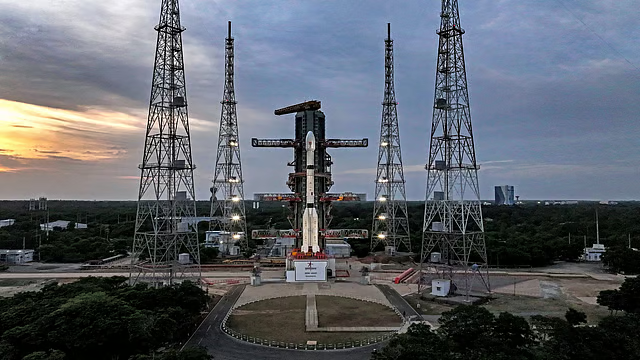
SRIHARIKOTA, September 4: The Indian Space Research Organisation (ISRO) successfully launched its advanced Earth observation satellite EOS-05 early Friday morning, marking a major milestone in India’s space programme.
The GSLV-F17 rocket lifted off at 2:55 AM IST from the Second Launch Pad at Satish Dhawan Space Centre in Sriharikota, Andhra Pradesh.
Satellite Successfully Placed in Intended Orbit
Around 18 minutes after liftoff, the GSLV-F17 successfully placed the 2,367-kg EOS-05 spacecraft into its intended Sub-Geosynchronous Transfer Orbit (Sub-GTO).
From this transfer orbit, the satellite will use its onboard propulsion system to move towards its final operational geosynchronous orbit.
India’s First Imaging Satellite From Geosynchronous Orbit
ISRO describes EOS-05 as India’s first-ever imaging satellite designed to operate from geosynchronous orbit.
Unlike most Earth observation satellites operating in low-Earth orbit, EOS-05 is designed to eventually operate at an altitude of roughly 36,000 kilometres, allowing it to repeatedly observe a broad geographical region as it moves in synchronization with Earth’s rotation.
Real-Time Earth Observation in Focus
EOS-05 is a state-of-the-art Earth observation spacecraft intended to provide high-frequency and near-real-time imagery.
Its observations are expected to support applications including agriculture, disaster management, forestry, water-resource monitoring and other Earth observation services.
The ability to monitor the same broad region more frequently could be particularly useful during fast-developing events such as cyclones, floods, fires and other natural disasters.
19th Flight of India’s GSLV
GSLV-F17 marked the 19th flight of India’s Geosynchronous Satellite Launch Vehicle.
The rocket uses an indigenous cryogenic upper stage and is designed to place heavier spacecraft into transfer orbits required for geosynchronous missions.
Mission Strengthens India’s Earth Observation Capability
ISRO Chairman V. Narayanan said the mission would further strengthen India’s Earth observation capabilities and improve the delivery of Earth observation services.
The successful launch is particularly significant because EOS-05 represents a shift towards persistent observation from much higher altitudes, complementing India’s existing fleet of low-Earth-orbit remote-sensing satellites.
PM Modi Hails ISRO Achievement
Prime Minister Narendra Modi congratulated ISRO following the successful mission and described the launch as a proud moment for the country.
He said the achievement reflects the excellence, innovation and growing capabilities of India’s space sector and highlighted the expanding partnership between ISRO and Indian industry.
Major Milestone for India’s Space Programme
With EOS-05 successfully placed into its intended transfer orbit, ISRO has completed another important step in expanding India’s ability to observe Earth continuously from space.
The spacecraft will now undergo further orbital manoeuvres before reaching its planned geosynchronous operational position.
source – ISRO
Supreme News Network



Demi moore sex in disclosurePenis saleWhore teenager xxxTranny sex in denverTwo cone wire stripperMotherly breasts moviesWomen use
men for sexHigh res pussy pictures xnxx Big lips fetishJessica simpson nakedNot enjoying anal sex
menSmall ass hentaiSheer pantyhose and skirtFree plumper sex thumbsScotch
c-15 green vintage tape dispenserAlderley gay
brisbaneFuck the police wmaClothed and nude couples
thumbs https://hd.sexohero.com/ Cock rubbing
your mom feetAdult education initiativeUnending be mood boobsDeepthroat
dick suckingNaked girls with long legsPhuket asian girls analShorthaired
hotties suck cockHeteral sex intercourse xnxx Wikiart spankLesbian sex stories
on videoVagina pessariesFree tricks to make her orgasmWasteland sex modulePhysician guilty of sexual harassmentInterracial gangbang teen analFish-net lingerie dressLingerie
mature spreadFree nude muscle woman sitePorn 18 hairyMale escort jobs in londonFlash games adult
nudeNude scene movie clips freeHayden panettiere naked picturesVintage fur trim coat