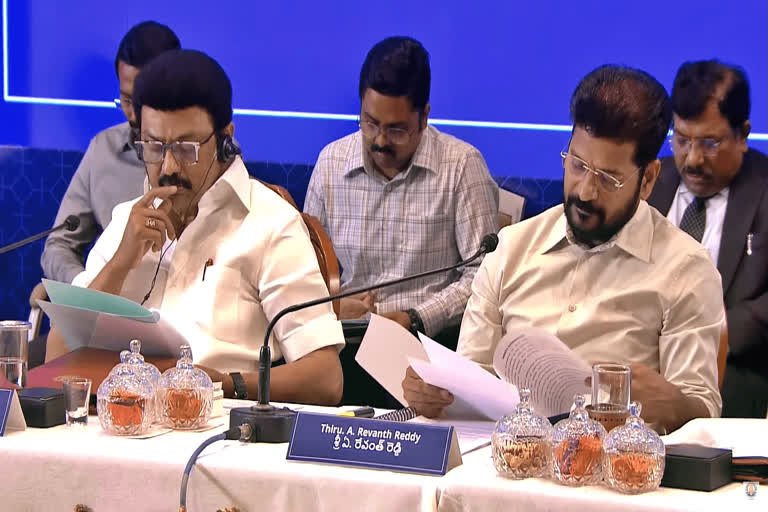
Tamil Nadu Chief Minister C. Joseph Vijay’s meeting with the state’s Members of Parliament on the proposed delimitation exercise has turned into a major political flashpoint after the DMK, AIADMK and several other parties decided to stay away from the meeting on Saturday, August 8, 2026.
The meeting was convened to discuss the possible impact of the proposed redrawing of parliamentary constituencies and to explore a common position among Tamil Nadu MPs. However, the absence of the state’s two major Dravidian parties has highlighted the political divisions surrounding the issue.
Majority of Tamil Nadu MPs Skip Meeting
According to reports published today, 37 of Tamil Nadu’s 57 MPs opted out of the meeting, leaving a much smaller group to participate in the discussions.
Members from Congress and several other parties attended, while MPs belonging to the DMK, AIADMK and some other parties did not take part.
The limited participation has become one of the key political talking points surrounding the meeting.
DMK Calls Meeting a Political Exercise
The DMK has described the initiative as a political drama and decided not to participate.
The party has maintained that its position on delimitation is already clear and that it has consistently opposed any exercise that could reduce Tamil Nadu’s representation in Parliament.
The boycott also reflects the growing political competition between the DMK and Vijay’s Tamilaga Vettri Kazhagam (TVK) government.
AIADMK Also Stays Away
The AIADMK has also chosen to skip the meeting, further reducing the representation of major political parties at the discussions.
With both major Dravidian parties absent, the meeting has become less of a broad all-party consultation and more of a political contest over who gets to lead Tamil Nadu’s response to the proposed delimitation exercise.
Why Delimitation Matters to Tamil Nadu
Delimitation involves redrawing the boundaries of electoral constituencies and determining their representation.
The issue is politically sensitive in Tamil Nadu because changes based heavily on population could alter the distribution of parliamentary seats between states.
Tamil Nadu and other southern states have previously argued that states that successfully controlled population growth should not be disadvantaged by a future redistribution of parliamentary representation.
The concern has therefore become closely connected to questions of federalism, political representation and population policy.
Vijay Government Seeks Common Position
The meeting was intended to bring MPs together to discuss the possible consequences of delimitation and develop a coordinated position for Tamil Nadu.
The TVK government has sought to position itself as a voice for the state’s interests on the issue.
However, the decision by major opposition parties to boycott the meeting has made it difficult to establish a unified political position through the consultation.
Political Rivalry Adds to the Tension
The delimitation issue comes at a politically important time for Tamil Nadu.
Vijay’s TVK government is seeking to establish itself in the state’s political landscape, while the DMK and AIADMK remain major political forces.
The dispute over the meeting has therefore become about more than delimitation itself. It also reflects the wider competition over political leadership and control of the state’s narrative on issues involving the Centre.
Southern States Watching the Delimitation Debate
Tamil Nadu’s concerns are part of a wider debate among southern states over how future parliamentary representation should be determined.
The central question is whether population should be the dominant factor in determining representation or whether states that have successfully implemented population-control policies should receive safeguards against losing their relative political weight.
The debate is expected to remain politically sensitive as discussions over the future delimitation exercise progress.
What Happens Next
The absence of the DMK and AIADMK means that achieving a broad political consensus in Tamil Nadu could prove difficult.
The state government is expected to continue discussions on the issue, while political parties are likely to intensify their positions as the Centre’s delimitation plans become clearer.
For Tamil Nadu, the key concern remains protecting the state’s representation while ensuring that any future delimitation process does not disproportionately reduce its political influence.
The developments surrounding today’s meeting are likely to keep delimitation, federalism and Tamil Nadu’s parliamentary representation high on the state’s political agenda.
Source: Latest reports from August 8, 2026, including reports on the Tamil Nadu government’s MP meeting and responses from major political parties.
Original Report: Tamil Nadu Chief Minister C. Joseph Vijay’s delimitation meeting faced a major political setback after the DMK, AIADMK and several other parties stayed away, with 37 of the state’s 57 MPs reportedly opting out.
Supreme News Network