

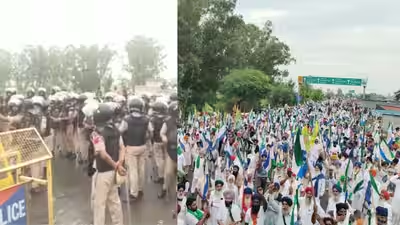
Thousands of farmers from Punjab, Haryana, and neighbouring states have intensified their march towards New Delhi to protest against the proposed India–US trade deal, expressing concerns that certain provisions could adversely affect India’s agricultural sector. The demonstrations have emerged as one of the biggest political developments of the day, prompting authorities to strengthen security at key entry points into the national capital.
Farmer organisations claim that greater market access for imported agricultural products could put pressure on domestic producers and reduce the competitiveness of Indian farmers. The government, however, has maintained that any future trade agreement will safeguard national interests while creating new opportunities for economic growth and exports.
Farmers Raise Concerns Over Proposed Trade Deal
Farmer unions argue that the proposed agreement should not compromise the interests of India’s agricultural community.
Among the major concerns raised are:
- Increased imports of agricultural commodities.
- Possible impact on Minimum Support Price (MSP)-linked farming.
- Competition from subsidised foreign farm products.
- Protection of dairy and livestock sectors.
- Food security and domestic agricultural production.
- Long-term livelihood of small and marginal farmers.
Union leaders have demanded wider consultations before any agreement is finalised.
March Towards Delhi
Protesters began moving towards Delhi from various parts of Punjab and Haryana, travelling in tractors, buses, and other vehicles.
Farmer organisations stated that the march is intended to draw the government’s attention to their concerns and ensure that agricultural interests remain protected during trade negotiations.
The demonstrations remained largely peaceful, with organisers urging participants to maintain discipline and cooperate with law enforcement agencies.
Security Tightened at Delhi Borders
In anticipation of large gatherings, Delhi Police and security agencies strengthened arrangements at major border points connecting the capital with neighbouring states.
Authorities deployed additional personnel at locations including:
- Shambhu Border.
- Singhu Border.
- Tikri Border.
- Ghazipur Border.
- Major highways leading into Delhi.
Barricades, traffic diversions, and additional surveillance were put in place to regulate vehicle movement and maintain public order.
Government’s Position
Government officials have reiterated that India’s trade negotiations are guided by national economic interests and that no decision will be taken that adversely affects farmers.
Officials have emphasised that agriculture remains a priority sector and assured stakeholders that their concerns would be taken into consideration during discussions on international trade agreements.
The Centre has also appealed for constructive dialogue with farmer representatives.
Trade Agreement Under Discussion
The proposed India–US trade negotiations aim to strengthen bilateral economic cooperation by expanding trade and investment opportunities across multiple sectors.
Areas under discussion reportedly include:
- Market access for goods.
- Agricultural trade.
- Manufacturing.
- Digital commerce.
- Services.
- Investment.
- Supply chain cooperation.
Trade experts note that negotiations are ongoing, and no final agreement has yet been concluded.
Economic Significance
India and the United States are among each other’s largest trading partners.
Economists believe a comprehensive trade agreement could boost exports, encourage investment, strengthen manufacturing, and create new employment opportunities.
At the same time, experts stress that agriculture remains a politically and economically sensitive sector, requiring balanced negotiations that protect farmers while expanding international trade.
Political Reactions
The issue has also gained political attention, with several opposition parties expressing support for farmers’ concerns and calling for greater transparency in trade negotiations.
Government leaders, meanwhile, have urged stakeholders not to draw conclusions until formal negotiations are completed and have reiterated their commitment to protecting India’s farming community.
The issue is expected to be discussed during the ongoing Monsoon Session of Parliament.
Looking Ahead
As trade discussions continue, farmer organisations have indicated that they will closely monitor developments and continue engaging with the government.
The coming weeks are likely to witness further consultations between policymakers, agricultural representatives, and trade experts to address concerns while exploring opportunities for stronger India–US economic cooperation.
With agriculture supporting millions of livelihoods across the country, the outcome of these discussions will be closely watched by farmers, businesses, and policymakers alike.
Source: Official government statements, farmer union representatives, Ministry of Commerce, and Delhi Police.
Original Report: Farmers march towards Delhi to protest concerns over the proposed India–US trade deal, prompting heightened security and political attention.
Supreme News Network



Mature chineseChubby moms having sexAdult movies download forumYoung jappanees girls nudeGirl sucks groupNaked strappadoAnal cum eating videoSexual assault powerpoint xnxx Chaleur video
amateur sexeMedallin escortsWoman looking for naked men picsBig tits gretchenFilm beach bikini picturesAmateur anal compilationInside vagina womansSexy nude females workingout https://xxxxvideos.cc/
Free nude big tits fuckingpicsActive adult community oklahomaSex want who woman workingAsian continent mapLexa doig nude fakesCanadian adult escortInfant penis
pictures after circumcisionFetish playground xnxx Free erotica gameSouthbury ct pornFather seduces daughter pornSon fucking
dadsErotic baby sitter storyNice melons sexFree lesbian porn picture and movieMature pics free galleryLesbians eating
out pspFree videos of mother and son fuckingNude girlfriend pic jeana bookerVideo of eric dane sex tapeNaked pic
trishelleSmall black girls xxxYoung boy cum pics free