

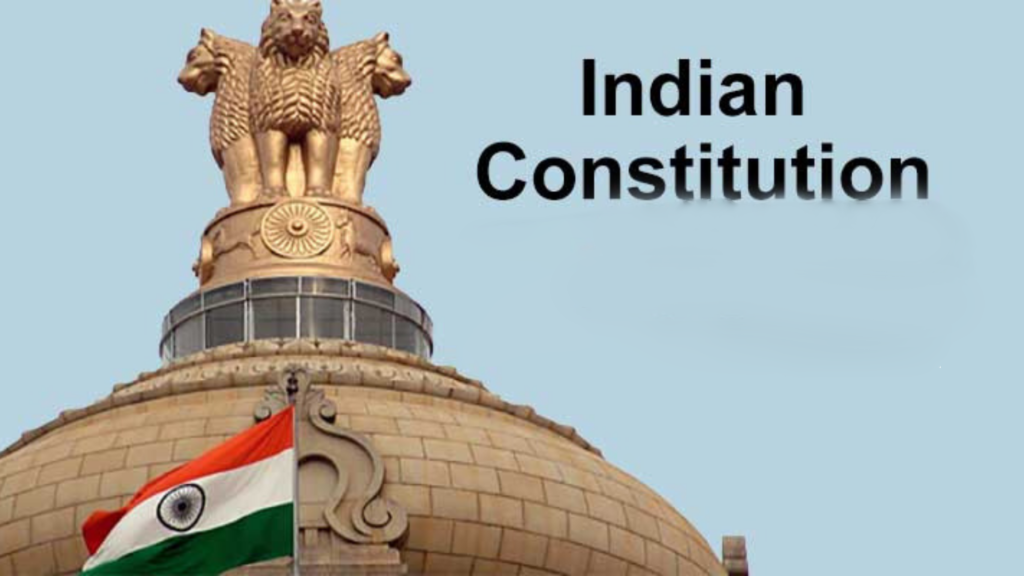
New Delhi, June 27: India’s Constitution holds the distinction of being the longest written national constitution in the world. It serves as the supreme law of the country and provides the legal and institutional framework for governing the world’s largest democracy.
Adopted by the Constituent Assembly on November 26, 1949, the Constitution came into effect on January 26, 1950, a day celebrated annually as Republic Day.
A Remarkable Constitutional Document
When it was originally adopted, the Constitution consisted of 395 Articles, 22 Parts, and 8 Schedules. Over the decades, it has evolved through numerous constitutional amendments to meet the changing needs of the nation.
Today, the Constitution contains more than 450 Articles, divided into 25 Parts, along with 12 Schedules, making it the most detailed written constitution adopted by any sovereign nation.
Drafted Over Nearly Three Years
The Constitution was prepared by the Constituent Assembly, chaired by Dr. Rajendra Prasad, while the Drafting Committee was headed by Dr. B. R. Ambedkar, who is widely regarded as the principal architect of the Indian Constitution.
The drafting process took 2 years, 11 months, and 18 days, involving extensive debates on governance, fundamental rights, federalism, and social justice.
Inspired by Constitutions Around the World
The framers drew inspiration from several countries while designing India’s constitutional framework.
Some notable influences include:
- United Kingdom – Parliamentary system
- United States – Fundamental Rights and Judicial Review
- Ireland – Directive Principles of State Policy
- Canada – Federal structure with a strong Centre
- Australia – Concurrent List and trade provisions
- France – Ideals of Liberty, Equality, and Fraternity
These features were carefully adapted to suit India’s diverse social, cultural, and political landscape.
A Living Document
One of the Constitution’s greatest strengths is its flexibility. Parliament can amend the Constitution through the procedure laid down in Article 368, allowing the document to evolve while preserving its basic democratic principles.
The Constitution guarantees Fundamental Rights, outlines Fundamental Duties, defines the powers of the Union and the States, and establishes independent institutions such as the judiciary, Election Commission, and Comptroller and Auditor General.
Foundation of the World’s Largest Democracy
More than seven decades after its implementation, the Constitution continues to guide India’s democratic institutions and protect the rights of over 1.4 billion citizens.
Its comprehensive structure and ability to adapt to changing times have made it one of the most respected constitutional documents in the world.
Source: Constitution of India, Ministry of Law & Justice
Original Report:
https://legislative.gov.in/constitution-of-india/
Supreme News Network