
New Delhi, June 24, 2026: Despite regulatory restrictions that have largely kept Chinese automakers out of the Indian market, Chinese electric vehicle (EV) technology is increasingly finding its way into India’s automotive industry through licensing agreements, supply partnerships, and technology collaborations.
According to industry reports, Indian automakers are turning to Chinese EV platforms and components to accelerate product development and remain competitive in the rapidly evolving electric mobility sector. While direct investment by Chinese automakers remains heavily scrutinized, technology partnerships are emerging as a practical route for cooperation between companies from the two countries.
One of the most significant examples is Tata Motors’ decision to utilize a vehicle platform developed by Chinese automaker Chery for its upcoming premium electric vehicle lineup. Industry experts say such arrangements allow Indian manufacturers to reduce development timelines while benefiting from proven EV architectures already tested in international markets.
The trend highlights a growing reality within the global EV industry: Chinese companies have established a strong lead in battery technology, electric powertrains, and vehicle platforms. As a result, manufacturers worldwide are increasingly relying on Chinese expertise to speed up their transition to electric mobility.
India tightened scrutiny of Chinese investments following border tensions in 2020, resulting in stricter approval requirements for companies seeking to invest in the country. These measures significantly limited the ability of Chinese automakers to establish direct operations in India. However, technology licensing agreements and supply-chain partnerships have continued to develop within the existing regulatory framework.
Industry analysts believe that Indian manufacturers are adopting a pragmatic approach. Rather than waiting years to develop entirely new platforms internally, companies can leverage existing technologies while gradually increasing local manufacturing and component sourcing. This strategy allows firms to launch products faster while supporting the government’s “Make in India” objectives.
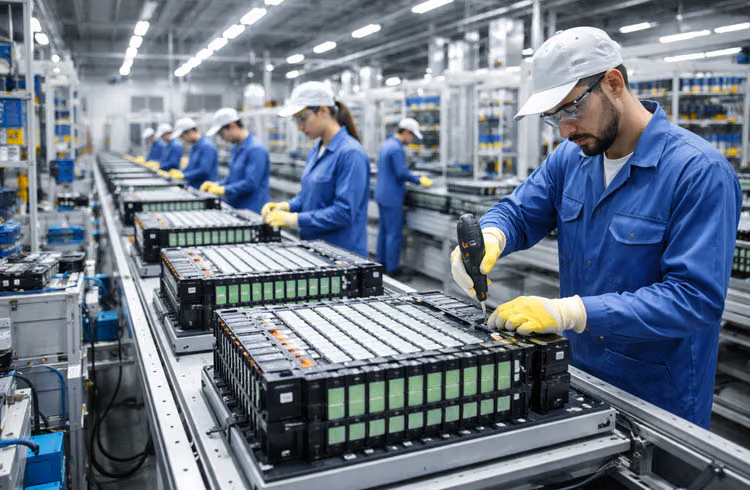
The influence of Chinese technology extends beyond vehicle platforms. Indian automotive component manufacturers are also entering partnerships with Chinese firms to produce electric powertrains, battery systems, and related technologies. Such collaborations are helping domestic suppliers build capabilities in areas that are critical for the future of electric mobility.
At the same time, challenges remain. Chinese export controls on certain advanced technologies and components have complicated some partnerships, forcing Indian companies to increase investments in research and development. Industry leaders say the long-term goal remains building indigenous capabilities while selectively leveraging international expertise where necessary.
Experts note that India’s EV market is among the fastest-growing in the world, making it an attractive destination for technology providers. As demand for electric vehicles continues to rise, the need for advanced battery systems, efficient powertrains, and cost-effective manufacturing solutions is expected to increase.
The growing presence of Chinese technology in India’s EV ecosystem underscores the complex relationship between economic interests and geopolitical considerations. While restrictions on direct participation remain in place, technological cooperation is quietly reshaping the country’s electric vehicle landscape.
As India pursues ambitious electrification targets and expands domestic manufacturing capabilities, industry observers expect technology partnerships to remain an important part of the country’s EV growth story over the coming years.
Source: Reuters
Original Report: https://www.reuters.com/world/china/chinese-ev-makers-are-shut-out-india-their-tech-isnt-2026-06-24/
Supreme News Network