

Published: June 20, 2026
By Supreme News Network
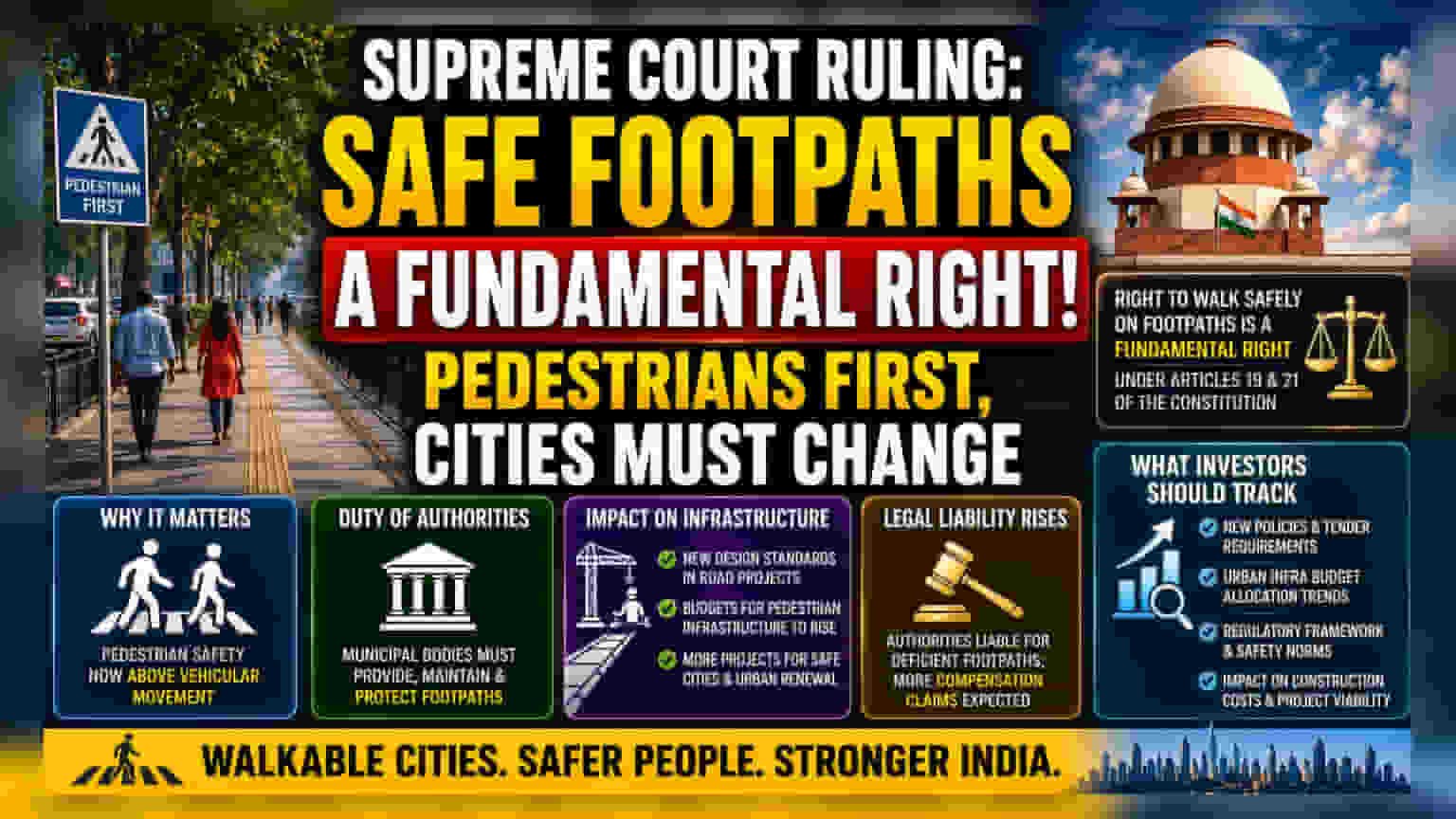
The Supreme Court has emphasized that safe and accessible footpaths are an essential part of citizens’ fundamental rights, urging governments and urban authorities to place greater focus on pedestrian-friendly infrastructure. The observation comes amid growing concerns over road safety, encroachments, and inadequate walking facilities in many Indian cities.
The Court highlighted that public spaces should be designed to serve all citizens, including children, senior citizens, and persons with disabilities. It stressed that safe mobility is closely linked to the constitutional right to life and dignity, making pedestrian infrastructure a critical aspect of urban governance.
The remarks have renewed discussions on how Indian cities can become safer, more inclusive, and more accessible for pedestrians.
Pedestrian Safety Gains Judicial Attention
The Supreme Court noted that footpaths are not merely optional urban amenities but a necessity for millions of citizens who depend on walking as part of their daily commute.
According to urban development experts, well-maintained pedestrian infrastructure contributes to:
- Safer roads
- Reduced traffic conflicts
- Improved accessibility
- Better public health
- Inclusive urban mobility
The Court observed that neglecting pedestrian facilities can create serious safety risks and affect the quality of life of city residents.
Urban Authorities Urged to Improve Infrastructure
The Court called on municipal bodies and state authorities to prioritize pedestrian infrastructure while planning and executing urban development projects.
Areas identified for improvement include:
- Continuous footpath networks
- Removal of encroachments
- Better street lighting
- Barrier-free access
- Improved maintenance systems
Experts believe these measures can significantly reduce accidents involving pedestrians and encourage safer movement within cities.
Urban planners have long argued that walking infrastructure deserves the same attention as roads designed for motor vehicles.
Growing Concerns Over Encroachments
One of the major challenges facing pedestrian mobility in many cities is the encroachment of footpaths by unauthorized structures, parking, and commercial activities.
Common issues include:
- Illegal parking on walkways
- Street obstructions
- Damaged pavements
- Poor maintenance
- Inadequate accessibility features
The Court stressed that footpaths must remain available for their intended purpose and should not be compromised by unauthorized use.
Authorities have been encouraged to strengthen enforcement efforts to protect public spaces.
Inclusive Cities Require Better Walkability
Urban experts point out that walkable cities offer multiple social and economic benefits.
Advantages include:
- Reduced traffic congestion
- Lower pollution levels
- Improved public health
- Greater accessibility
- Enhanced community interaction
Many global cities have increasingly invested in pedestrian-first policies to improve quality of life and promote sustainable transportation.
The Supreme Court’s observations are expected to strengthen support for similar initiatives in India.
Accessibility Remains a Key Concern
The Court emphasized that urban infrastructure should be designed to accommodate all users, including persons with disabilities and elderly citizens.
Key accessibility measures include:
- Ramps and tactile paving
- Smooth walking surfaces
- Safe crossings
- Adequate signage
- Barrier-free pathways
Advocates for disability rights welcomed the emphasis on inclusive infrastructure, noting that accessibility remains a challenge in many urban areas.
Improving footpaths can help ensure equal access to public spaces and services.
Smart City Initiatives Face Renewed Focus
The observations are likely to influence ongoing smart city and urban modernization projects across the country.
Urban development experts suggest future projects should prioritize:
- Pedestrian-friendly streets
- Integrated mobility systems
- Public transport connectivity
- Sustainable infrastructure
Cities that invest in walkability often experience broader benefits in terms of environmental sustainability and public well-being.
Officials may now face greater scrutiny regarding the implementation of pedestrian infrastructure projects.
Road Safety Linked to Urban Design
Road safety specialists argue that urban design plays a crucial role in preventing accidents.
Important factors include:
- Dedicated pedestrian zones
- Safe crossings
- Traffic calming measures
- Proper lighting
Research has shown that well-designed pedestrian infrastructure can significantly reduce the risk of injuries and fatalities.
The Court’s observations reinforce the importance of integrating safety considerations into urban planning decisions.
Public Interest and Civic Responsibility
The issue of pedestrian safety affects millions of people daily.
Citizens, civic organizations, and urban planners have increasingly called for greater accountability in maintaining public infrastructure.
Experts note that creating pedestrian-friendly cities requires cooperation between:
- Government agencies
- Municipal authorities
- Urban planners
- Community organizations
Public participation can also play a role in identifying areas that require improvement.
Experts Welcome the Observation
Urban policy specialists have broadly welcomed the Supreme Court’s emphasis on pedestrian rights.
Many believe the observation could encourage:
- Better policy implementation
- Increased infrastructure investment
- Stronger enforcement actions
- Improved urban design standards
The recognition of pedestrian mobility as a matter connected to fundamental rights is being viewed as a significant development in discussions surrounding urban governance.
Source: Supreme Court Proceedings / Legal Reporting
Original Report: https://www.livelaw.in/
Supreme News Network

Mình đánh giá cao đăng nhập hb88 vì dùng trên Android khá mượt. TONY06-18