
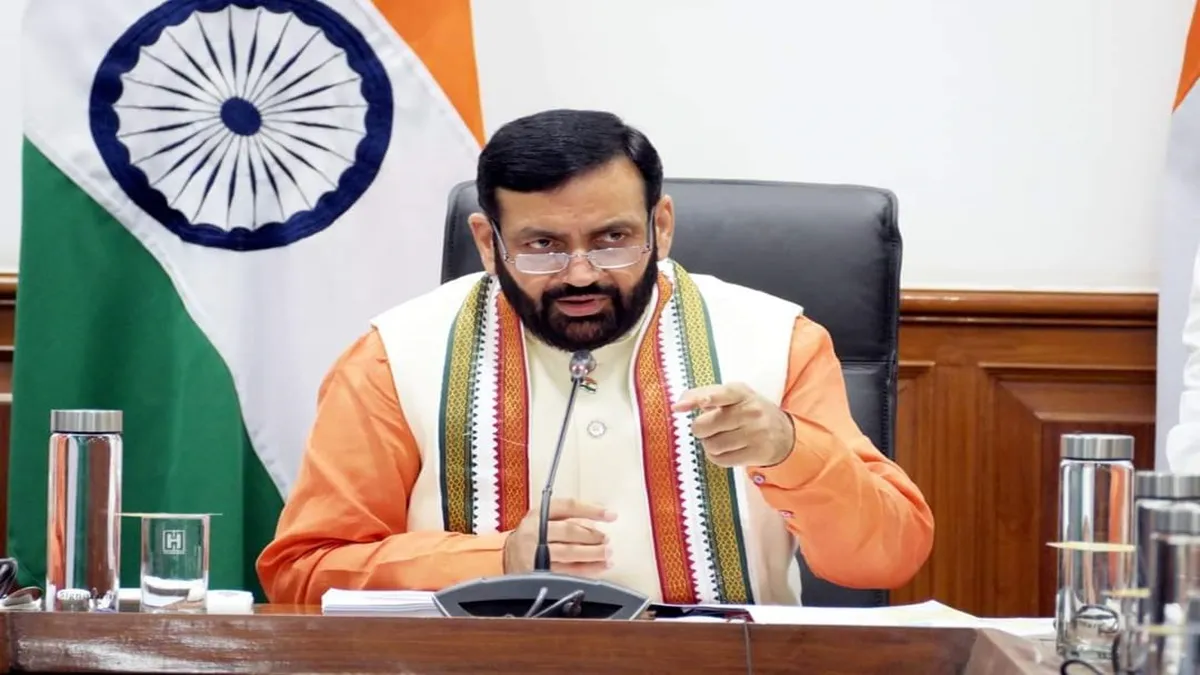
Gurugram, November 24, 2026: Haryana Chief Minister Nayab Singh Saini has announced that the state government will provide matching grants to village panchayats equivalent to the amount they collect through water bills, aiming to strengthen rural finances, encourage water conservation and reduce dependence on government funding.
The announcement was made on Monday, November 23, during the inaugural session of a two-day national conference at Gurugram University.
The conference, organised by the Swarna Jayanti Haryana Institute for Fiscal Management (SJHIFM), focused on the devolution of powers, financial sustainability and effective service delivery in Panchayati Raj Institutions and urban local bodies.
Under the announced arrangement, a village panchayat collecting a certain amount in water bills will become eligible for an equivalent grant from the Haryana government.
The initiative is part of a broader effort to improve financial accountability, strengthen local governance and provide better civic facilities in villages and towns.
Haryana Government Announces Matching Grants for Panchayats
Chief Minister Nayab Singh Saini announced a new financial incentive for village panchayats that collect water bills from residents.
Under the government’s decision, the state will provide a matching grant equal to the amount collected through village water bills.
The measure is intended to encourage panchayats to improve revenue collection and develop stronger financial resources.
For example, if a village collects ₹1 lakh through water bills, an equivalent matching grant would amount to ₹1 lakh, potentially making ₹2 lakh available through the combined collections and government support.
This is an illustration of the announced matching principle, not a confirmed payment to any particular village.
Detailed implementation guidelines, including eligibility conditions and disbursement procedures, have not yet been publicly specified.
Nayab Singh Saini Addresses National Conference in Gurugram
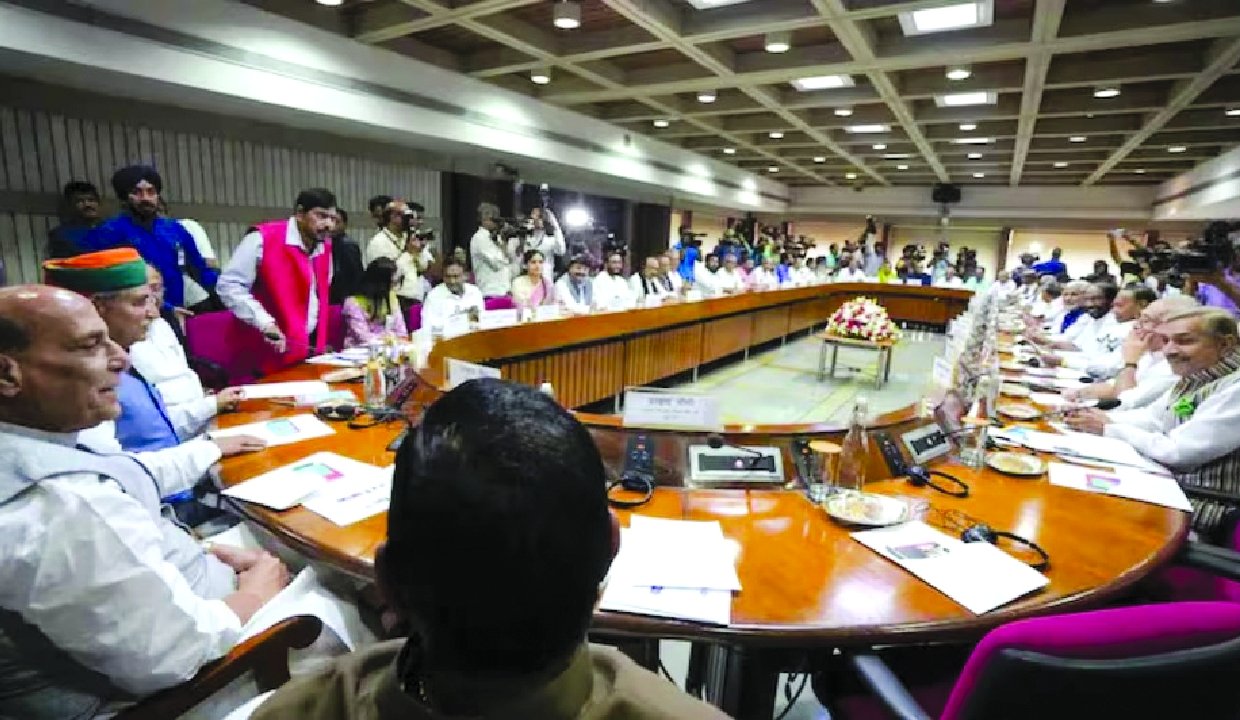
The announcement was made at a two-day national conference held at Gurugram University in Sector 51.
The event was organised by the Swarna Jayanti Haryana Institute for Fiscal Management.
The conference brought together representatives from Panchayati Raj Institutions, municipalities, government departments and other organisations.
Union Minister for Power, Housing and Urban Affairs Manohar Lal Khattar attended the event as a special guest.
Haryana Development and Panchayats Minister Krishan Lal Panwar and Urban Local Bodies Minister Vipul Goel were also present.
The discussions focused on strengthening financial powers, administrative responsibilities and public service delivery at the grassroots level.
Panchayats Urged to Become Financially Self-Reliant
During his address, Chief Minister Saini emphasised that local governments should develop independent sources of income.
He said panchayats and urban local bodies must reduce their dependence on government budgetary allocations.
According to the chief minister, financially stronger local institutions can respond more effectively to the needs of residents.
He encouraged elected representatives to identify opportunities for generating revenue through available local resources.
The matching grant initiative is intended to support this objective by rewarding improved water bill collections.
The broader goal is to strengthen financial independence while maintaining accountability for public services.
Water Conservation Becomes a Major Priority
Water conservation was another important subject discussed during the conference.
Chief Minister Saini expressed concern about declining groundwater levels and water shortages in parts of Haryana.
He urged elected representatives to take greater responsibility for encouraging responsible water consumption.
Improved collection of water charges was presented as one component of strengthening village-level water management.
However, collecting water bills alone does not guarantee reduced consumption or improved groundwater levels.
Effective conservation will also require measures such as reducing leakage, maintaining water supply infrastructure and promoting responsible usage.
The government wants local institutions to play a more active role in protecting water resources.
Matching Grants Could Strengthen Village Development
The proposed matching grants could provide additional financial resources to village panchayats.
Greater financial capacity may help local bodies address everyday infrastructure and service requirements.
These include the maintenance of drinking water systems, roads, drainage networks and other public facilities.
Additional resources could also support local development priorities identified through Gram Sabha meetings.
However, the specific permitted uses of the matching grants will depend on the government’s implementation guidelines.
The effectiveness of the initiative will depend on transparent accounting, timely fund transfers and appropriate monitoring.
Centre Calls for Better Use of Panchayat Assets
Union Minister Manohar Lal Khattar also addressed the conference and encouraged local bodies to use their existing assets more effectively.
He suggested that panchayats could generate revenue by leasing land through transparent procedures.
Other possibilities included using village ponds for fish farming and developing markets or buildings that could generate rental income.
Khattar also recommended investing available funds in income-generating assets where appropriate.
These suggestions were presented as ways to strengthen the financial position of local governments.
The objective is to enable panchayats and municipalities to finance some of their development and maintenance requirements through their own resources.
Union Minister Suggests Monthly Shramdaan in Villages
Manohar Lal Khattar also proposed encouraging community participation through regular voluntary service activities.
He suggested that villages could designate one day every month for Shramdaan, or voluntary community work.
Activities could include cleaning streets, maintaining village ponds, repairing public spaces and conducting plantation drives.
Gram Sabhas could identify priority tasks based on local requirements.
The proposal seeks to encourage residents to participate in maintaining community infrastructure.
However, these activities would depend on local planning and voluntary participation.
Haryana Plans Greater Focus on Civic Infrastructure Maintenance
The conference also highlighted the need for regular maintenance of public infrastructure.
Chief Minister Saini said local bodies should respond promptly to problems involving roads, drains, streetlights and drinking water facilities.
He referred to a provision in Haryana’s 2026–27 budget setting aside 5% of funds for the maintenance of community assets.
The measure is intended to support the repair and upkeep of existing infrastructure.
Timely maintenance can help prevent minor problems from developing into more expensive repairs.
Local bodies were encouraged to improve complaint resolution and ensure that public facilities remain functional.
Village Caretaker System Discussed at Conference
Union Minister Khattar suggested introducing a village caretaker system to improve infrastructure maintenance.
He referred to a pilot initiative in his Karnal parliamentary constituency, where 15 village caretakers had been appointed.
The arrangement was supported by a dedicated digital portal allowing residents to report damaged infrastructure using photographs.
The complaints could then be forwarded to the relevant departments for action.
The system was presented as an example of how local accountability and technology could improve civic services.
Its broader adoption would depend on decisions by the relevant authorities.
Haryana Highlights Panchayati Raj Reforms
Chief Minister Saini also discussed reforms introduced in Haryana’s local governance system.
He referred to educational qualification requirements for panchayat representatives introduced in 2015.
The chief minister also highlighted the introduction of 50% reservation for women in Panchayati Raj Institutions in 2020.
He mentioned the state’s Lal Dora-free initiative, which helped rural residents obtain documented property ownership rights.
The approach subsequently became associated with the nationwide SVAMITVA programme.
Saini presented these reforms as part of Haryana’s efforts to strengthen local governance and representation.
Women Given Greater Representation in Local Institutions
Women’s participation in local government was another topic discussed during the conference.
The Haryana government highlighted its reservation policies for Panchayati Raj Institutions.
The chief minister also referred to provisions supporting representation for Backward Classes-B through the Haryana Panchayati Raj Amendment Act, 2024.
Women have additionally been given 50% representation in village water and sewerage committees, according to the state government’s account.
These measures are intended to broaden participation in local decision-making.
Effective representation also depends on training, administrative support and the ability of elected members to exercise their responsibilities.
Panchayats and Municipalities Asked to Improve Public Services
The Haryana government has urged rural and urban local bodies to strengthen the delivery of essential services.
These include drinking water, sanitation, sewerage, roads and the maintenance of public spaces.
Local representatives were encouraged to respond quickly to public complaints and improve financial management.
Saini said local governments should use resources effectively and establish greater accountability.
The chief minister also encouraged healthy competition among villages and municipal wards.
The broader objective is to create local institutions capable of managing everyday civic needs more efficiently.
Viksit Bharat 2047 Vision Linked to Stronger Local Governance
Chief Minister Saini connected the proposed reforms with the national objective of Viksit Bharat 2047.
He said India’s long-term development goals would require stronger and more financially independent villages and urban wards.
The chief minister emphasised that rural areas should be treated as important centres of development.
He also highlighted the role of Gram Sabhas in identifying priorities for panchayat development plans.
The conference discussed how administrative authority, financial resources and public participation could support local governance.
These objectives form part of wider discussions about decentralisation and the responsibilities of local institutions.
What Happens Next for Haryana’s Matching Grant Initiative?
The Haryana government will need to establish the administrative procedures for implementing the matching grant decision.
Important details include how water bill collections will be verified, when grants will be released and how funds may be used.
Local authorities may also need systems for maintaining accurate collection records and monitoring expenditure.
Panchayats will be expected to strengthen financial management and encourage timely payment of water charges.
However, the government has not yet publicly announced a statewide disbursement date or detailed eligibility framework.
Further notifications will provide greater clarity about implementation.
Haryana Panchayat Matching Grants: Key Highlights
Haryana Chief Minister Nayab Singh Saini announced that village panchayats will receive matching grants equivalent to their water bill collections.
The announcement was made during a national conference at Gurugram University on November 23, 2026.
The initiative aims to improve panchayat finances, promote water conservation and reduce dependence on government grants.
Union Minister Manohar Lal Khattar also encouraged local bodies to generate income from land, buildings, ponds and other assets.
The conference discussed infrastructure maintenance, community participation, financial accountability and better public service delivery.
Haryana highlighted its existing Panchayati Raj reforms and the importance of strengthening local institutions.
The matching grant decision represents a new financial incentive for village-level governance, although detailed implementation procedures have yet to be announced.
Source – Press Trust of India (November 23, 2026), The Times of India (November 24, 2026), Hindustan Times (November 24, 2026), Amar Ujala (November 23, 2026), United News of India (November 23, 2026)
Supreme News Network