

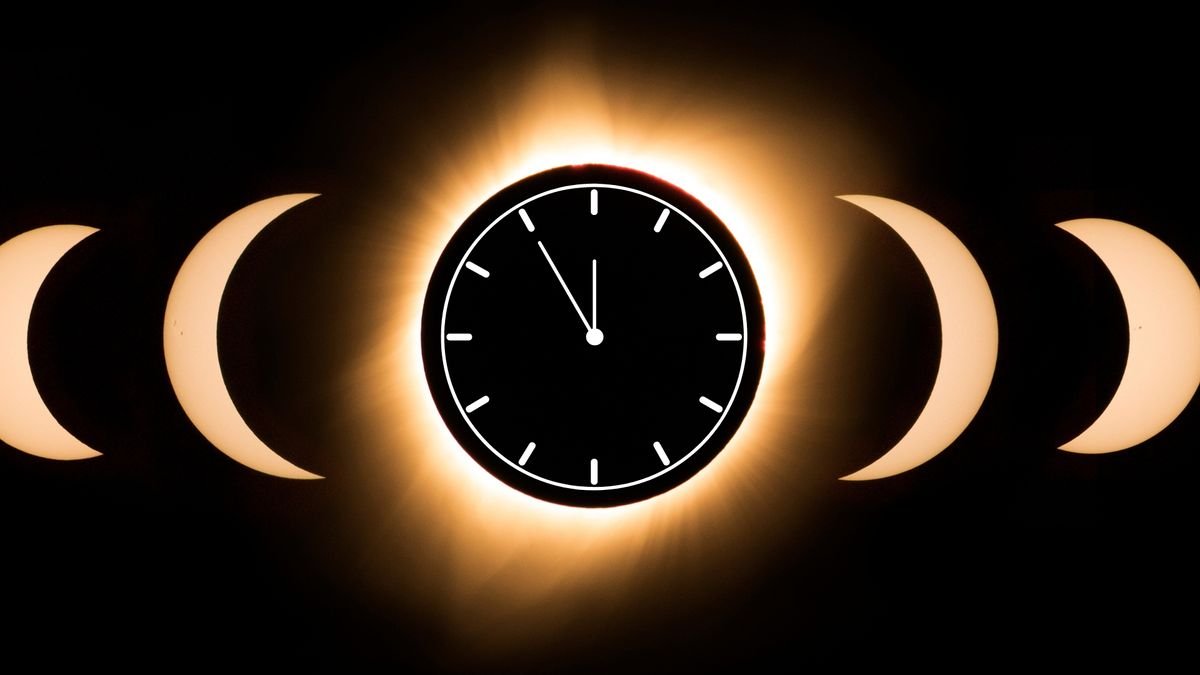
A rare total solar eclipse is taking place today, August 12, 2026, creating a major astronomical spectacle across parts of the Northern Hemisphere. During totality, the Moon will completely cover the Sun’s bright disk, briefly revealing the Sun’s outer atmosphere, or corona. It is the only total solar eclipse of 2026.
Eclipse Will Not Be Visible From India
Despite the excitement around the event, India will not witness the August 12 total solar eclipse.
The Indian Meteorological Department’s eclipse information confirms that the eclipse is not visible from India. Indian skywatchers can instead follow live coverage and scientific broadcasts of the event.
Where Will the Total Eclipse Be Visible?
The path of totality passes through areas including Greenland, Iceland and northern Spain, with additional visibility across parts of the North Atlantic region.
In the totality zone, the Moon will completely block the Sun for a short period, producing a dramatic change in daylight conditions.
A much larger region will experience a partial solar eclipse, with millions of people able to see at least part of the Sun covered by the Moon.
Millions Turn Their Eyes to the Sky
The event has attracted significant attention from astronomers, photographers and skywatchers.
Around 15 million people are estimated to be within the path of totality, while nearly one billion people could experience some degree of partial eclipse.
Why Total Solar Eclipses Are Special
A total solar eclipse occurs when the Moon passes directly between Earth and the Sun and appears large enough in the sky to completely cover the Sun.
For observers inside the narrow path of totality, the sky can become dramatically darker and the Sun’s corona becomes visible around the silhouette of the Moon.
Scientists also use total eclipses to study the solar corona and the behaviour of the Sun’s outer atmosphere.
Eclipse Timing
The eclipse begins in the Pacific region before moving across the Northern Hemisphere.
The maximum eclipse occurs around 17:46 UTC, while totality moves through Greenland, Iceland and the Iberian Peninsula later in the event. Exact local timings vary significantly depending on the observer’s location.
NASA and Scientists Track the Event
NASA and other scientific organisations are monitoring the eclipse and providing coverage for people outside the visibility zone.
The event also provides researchers with an opportunity to observe the solar corona and collect scientific measurements during the brief period of totality.
Safe Viewing Is Essential
People watching a partial eclipse must never look directly at the Sun without proper solar-viewing protection.
Ordinary sunglasses are not sufficient. Certified solar eclipse glasses or appropriate solar-viewing equipment should be used. During the brief period of totality, direct viewing is possible only while the Sun is completely covered; eye protection must be put back on before the bright solar disk reappears.
A Major Astronomical Event of 2026
The August 12 eclipse is one of the biggest astronomical events of the year and will be particularly significant for observers in the totality path.
Although India will miss the direct view, live broadcasts will allow Indian audiences to follow the rare event from home.
The next total solar eclipse visible from India is much farther away, making today’s event an important reminder of how rare and geographically limited total solar eclipses can be.
Source: Indian Meteorological Department, Reuters and latest astronomical reports published August 12, 2026.
Original Report: The only total solar eclipse of 2026 is occurring on August 12, with totality crossing parts of Greenland, Iceland and Spain while India remains outside the visibility zone.
Supreme News Network



I am really enjoying the bonuses they offer for new users. It is a great way to start. The app is very stable too. Check out 168jlloginapp