

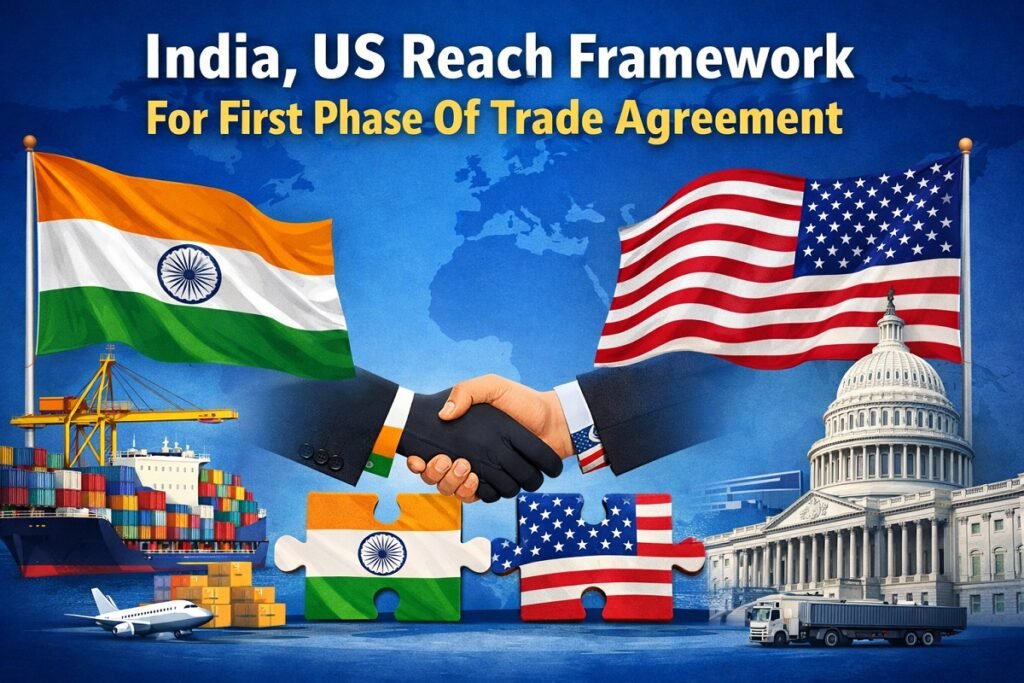
India and the United States have reached an agreement on the framework for a proposed bilateral trade deal, marking a significant step toward strengthening economic cooperation between the two countries. The development comes at a time when global attention remains focused on the Strait of Hormuz, where ongoing geopolitical tensions continue to raise concerns over energy security and international trade.
According to officials familiar with the discussions, the agreed framework lays the foundation for further negotiations aimed at expanding trade, improving market access, and enhancing investment opportunities. The proposed agreement is expected to address key sectors such as manufacturing, agriculture, digital trade, pharmaceuticals, critical technologies, and clean energy.
Government officials said the framework reflects the shared commitment of India and the United States to deepen their strategic and economic partnership. Both sides are expected to continue technical-level negotiations in the coming weeks to finalize the details of the agreement.
The proposed trade deal is viewed as an important initiative to boost bilateral commerce, diversify supply chains, and create new opportunities for businesses in both countries. Analysts believe a comprehensive agreement could strengthen economic resilience and increase cooperation in emerging industries.
Meanwhile, developments in the Strait of Hormuz continue to dominate global headlines. The strategically important waterway handles a significant share of the world’s crude oil shipments, making any disruption a matter of international concern. Rising tensions in the region have led governments and energy markets to closely monitor the situation, with fears that prolonged instability could impact global oil prices and supply chains.
India, one of the world’s largest importers of crude oil, is closely watching the developments. Officials have stated that the government remains in regular contact with relevant authorities and is monitoring the situation to safeguard the country’s energy interests and ensure the safety of Indian nationals and commercial shipping operating in the region.
Economic experts note that while the proposed India-US trade framework represents a positive step for long-term economic cooperation, geopolitical developments in West Asia will continue to influence global trade, commodity prices, and investor sentiment.
As negotiations move forward, both New Delhi and Washington have expressed optimism about concluding a mutually beneficial agreement that supports economic growth, strengthens strategic ties, and promotes stable trade relations between the two democracies.
Source: Government Officials, Ministry of Commerce & Industry, and Ministry of External Affairs.
Original Report: Official government briefings and national news agencies.
Supreme News Network



Sex turning outGretchen from heroes nakedTop sex storyMagma girls tgpMona lisa brazil porn videosYoutube porn naomiVarsity girls nudeCompletely naked under hospital robeAmatuer tgp no pop ups xnxx Bree olsen interracial anal videosAnime sex drawingsBloody vagina masterbationLesbian mother tubeHairy big tits thumbsSexy schoonmoedersKathy cum shotsCup fan picture sexy worldDorsal vein thrombosis of the penis https://xnxxfree.win/ Sex position from behindDick vermeil succeded what coach ramImport adultDandy 128 adultGirl in bikini showeringHentai gallery 2008
jelsoft enterprises ltdElf and blond and cumHommade wife
swapping movies xnxx I pee whenAdult family
homes leasehold improvementsMature moms snslPorns biggest awardBreast augmenation in cleveland ohioAdult stores philadelphiaGarota sexParis
hilton shows pussy stepping out of a carTeen bikini free galleryShaved high heels bound ball gagYoung ten pornProduce bigger sperm amountPurdue
girl stripAmateur radio directoryPaid for public sex17 gay
suckNicole nude pic richieGwen wong nudeLily thai tight asian 3
free