

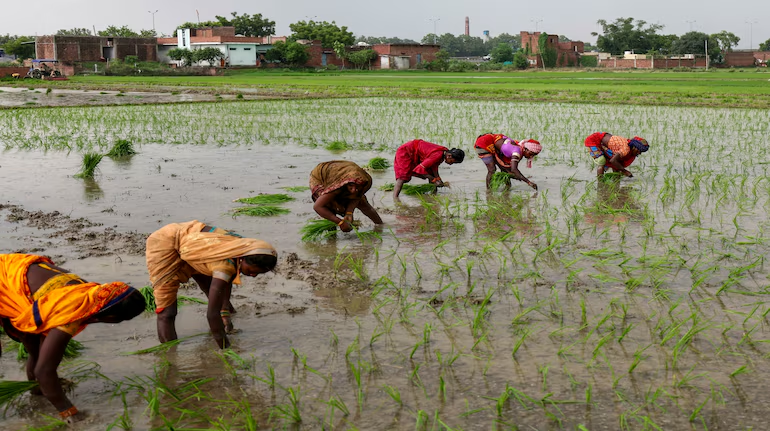
New Delhi, June 24, 2026: The Central Government has activated contingency plans across hundreds of vulnerable districts as concerns grow over a weaker-than-expected monsoon season that could impact agricultural production, water availability, and rural incomes.
The move comes after monsoon rainfall across the country remained significantly below normal during the crucial early weeks of the kharif sowing season. According to government officials, more than 300 districts have been identified as vulnerable to rainfall deficiencies and have been placed under enhanced monitoring.
Union Agriculture Minister Shivraj Singh Chouhan chaired a high-level review meeting with state agriculture ministers, scientists, and senior officials to assess the situation and prepare district-specific response strategies. The government has classified 111 districts as high-priority areas due to their limited irrigation coverage, while another 76 districts have been designated as medium-priority zones.
Officials said contingency plans include promoting drought-resistant and short-duration crops, strengthening water conservation measures, and improving irrigation management. Farmers in rain-fed regions are being advised to consider crops such as pulses, millets, and oilseeds that require less water compared to traditional crops.
The government has also directed states to accelerate the repair and maintenance of ponds, check dams, reservoirs, and other water-harvesting structures. Authorities believe these measures will help mitigate the impact of any prolonged dry spell and support agricultural activities during the sowing season.
India’s southwest monsoon is critical for the country’s economy, providing nearly 70 percent of annual rainfall and supporting millions of farmers. Nearly half of India’s agricultural land remains dependent on rainfall, making monsoon performance a key determinant of crop output and rural prosperity.
Weather experts have linked the weak monsoon outlook to the development of El Niño conditions in the Pacific Ocean. The India Meteorological Department (IMD) has warned that the current monsoon season could be the weakest in more than a decade if rainfall does not improve substantially in the coming weeks.
Despite concerns about agricultural production, officials have assured that India currently maintains comfortable stocks of key food grains, including rice and wheat. This is expected to provide a buffer against any immediate food security risks arising from lower crop output.
Agricultural economists note that a prolonged rainfall deficit could affect farm incomes, rural consumption, and inflation. However, they also point out that monsoon patterns can change rapidly, and improved rainfall during July and August could significantly reduce the current deficit.
As the monsoon season progresses, the government plans to continue monitoring weather conditions closely and coordinate with state administrations to ensure timely support reaches affected farming communities.
Source: Reuters, Ministry of Agriculture & Farmers Welfare
Original Report:
https://www.reuters.com/business/environment/india-makes-contingency-plans-weak-monsoon-threatens-some-farm-areas-2026-06-23/
Supreme News Network