The United States military fired two Hellfire missiles from a Navy helicopter at a Panama-flagged cargo ship in the Gulf of Oman after Washington said the vessel was attempting to breach its maritime blockade of Iranian ports. The incident took place on August 11, 2026, and has emerged as a major escalation in the already tense situation surrounding Iran and the Strait of Hormuz.
US Forces Target Cargo Ship
The vessel, identified as the M/V Vela Nova, was travelling through the Gulf of Oman toward an Iranian port, according to the US military.
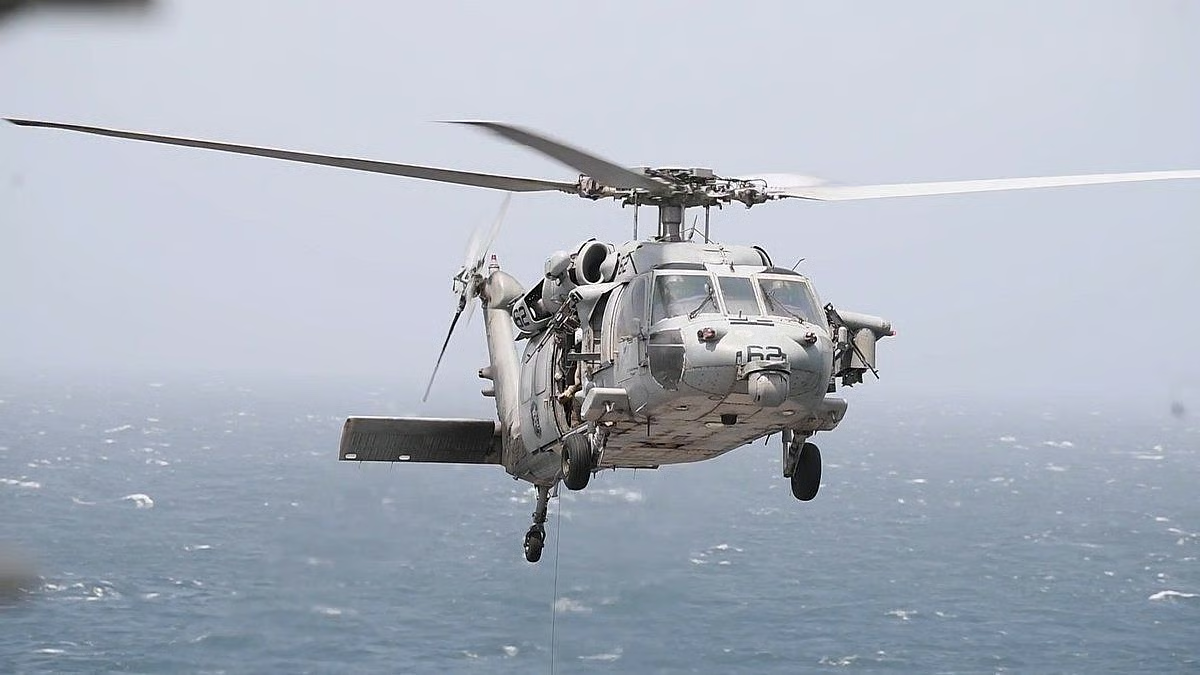
US Central Command (CENTCOM) said the ship’s civilian crew ignored repeated warnings from American forces. A US Navy MH-60 helicopter subsequently fired two Hellfire missiles into the vessel’s engine room.
The strikes disabled the ship’s steering and propulsion systems, preventing it from continuing toward Iran.
All 17 Crew Members Reported Safe
Despite the missile strike, there were no reported casualties among the 17 crew members aboard the vessel.
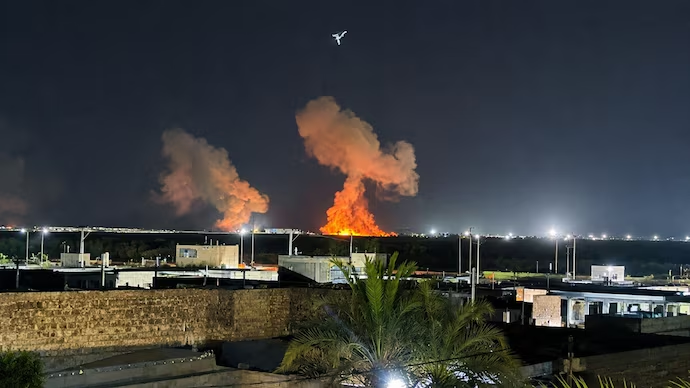
The strike reportedly caused a fire inside the ship, but the fire was subsequently extinguished. Maritime-security sources said the crew members were accounted for following the incident.
The US military said the vessel was no longer travelling toward Iran in violation of the blockade.
Incident Took Place Near Pakistan
The Vela Nova was reportedly struck approximately 70–71 nautical miles off the coast of Pakistan while travelling westward through the Gulf of Oman.
The incident was also reported by the UK Maritime Trade Operations agency, which initially described it as an incident involving a container ship and military forces without providing further details.
Third Vessel Disabled by US Forces
The incident marks the third time US forces have forcibly disabled a commercial vessel since the United States reinstated its blockade of Iranian ports in July.
CENTCOM said that, as of August 11, American forces had redirected 55 commercial ships, boarded two vessels and disabled three non-compliant vessels during the renewed enforcement campaign.
The United States had previously imposed a blockade earlier in 2026 before temporarily lifting it as part of diplomatic efforts.
Iran Blockade Raises Legal and Diplomatic Concerns
The US blockade is aimed at putting economic pressure on Iran by restricting maritime trade with Iranian ports.
Iran has strongly opposed the blockade and has demanded that Washington lift the restrictions as part of efforts to reopen the Strait of Hormuz, one of the world’s most important energy shipping routes.
The use of missiles against a civilian commercial vessel is likely to intensify debate over the legality and consequences of the US enforcement campaign.
Strait of Hormuz Remains Major Flashpoint
The incident is particularly significant because of the strategic importance of the Strait of Hormuz.
A large share of the world’s oil shipments traditionally passes through the waterway. Continuing military tensions in and around the region have already disrupted shipping and contributed to higher energy prices.
Any further escalation could have consequences for global oil markets, shipping costs and international trade.
US-Iran Tensions Remain High
The missile strike comes as diplomatic efforts between Washington and Tehran remain uncertain.
Iran has maintained pressure around the Strait of Hormuz, while the United States has sought to use economic and maritime restrictions to pressure Tehran.
The latest confrontation demonstrates that the dispute has moved beyond diplomatic statements, with commercial shipping increasingly caught between competing military and economic measures.
Global Shipping Faces Growing Risk
The Vela Nova incident is likely to increase concerns among international shipping companies operating around the Gulf of Oman and the wider Middle East.
Commercial vessels travelling toward Iranian ports now face the possibility of being intercepted or redirected by US forces if Washington considers their movements a violation of the blockade.
The development could also increase insurance and transportation costs for vessels operating in the region.
What Happens Next?
The immediate situation remains focused on the disabled Vela Nova and the wider enforcement of the US blockade.
Further incidents involving commercial vessels could significantly increase tensions between the United States and Iran, particularly if casualties occur.
For global markets, the key concern will remain whether the confrontation spreads to the Strait of Hormuz and other major shipping routes, potentially creating fresh pressure on oil supplies and international trade.
Source: US Central Command statements and reports published August 11–12, 2026.
Original Report: A US Navy MH-60 helicopter fired two Hellfire missiles at the Panama-flagged M/V Vela Nova after US forces said the vessel ignored warnings and attempted to breach the blockade of Iranian ports. All 17 crew members were reported safe.
Supreme News Network


[3771]kissy88 Official Login | Trusted Online Casino Malaysia,kissy88 offers high payout slot games and fast e-wallet deposits for a seamless experience. Download the app today for secure and instant access to play. visit: kissy88