Washington, October 17, 2026: US President Donald Trump has waived a broad package of Russia-related sanctions, restrictions and tariffs shortly before the measures were due to take effect under legislation he signed last month. Trump cited the national interest of the United States to justify the decision, which has drawn criticism from lawmakers across party lines who argue that easing pressure could benefit Moscow amid its ongoing war in Ukraine.
Sanctions Were Due to Take Effect on October 18
The measures were part of the Lindsey O. Graham Sanctioning Russia and Iran Act of 2026, which received strong bipartisan backing in Congress.
Under the legislation, Trump faced an October 18 deadline to implement the measures or exercise the waiver authority provided by the law.
Trump Invokes Presidential Waiver Authority
In an executive order issued on Friday, Trump waived many of the sanctions, restrictions and duties included in the legislation.
The White House defended the decision on national-interest grounds, leaving open the possibility that the administration could review its approach again in the future.
Legislation Targeted Russia’s Energy Revenue
The law was designed to increase economic pressure on Russia over its continuing war in Ukraine. Its provisions included sanctions targeting Russian officials, banks and vessels allegedly linked to Moscow’s so-called shadow fleet, which is used to transport Russian energy exports.
The measures were intended to restrict revenue streams that help sustain Russia’s economy and its war effort.
Tariffs of Up to 100% Were Planned
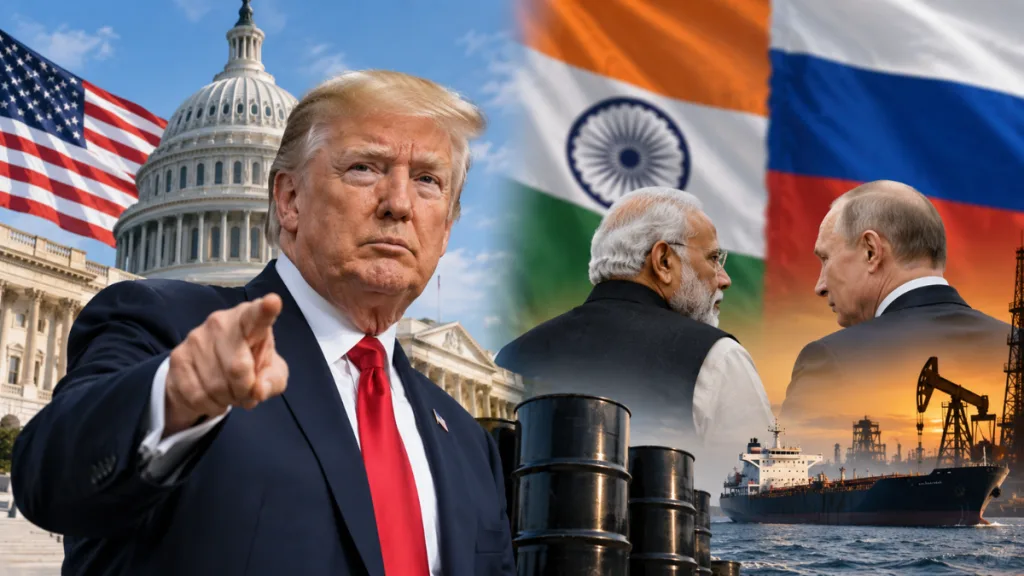
One of the legislation’s most significant provisions authorised tariffs of up to 100% on major countries continuing to purchase Russian oil and gas.
The proposed measures could have affected countries such as India and China, both major buyers of Russian energy. The waiver reduces the immediate threat of additional US tariffs linked to those purchases, although the broader policy framework remains in place.
India Could Receive Relief on Russian Oil Imports
India has continued to purchase Russian crude oil, leaving its energy trade exposed to potential secondary tariffs targeting countries that buy Russian energy.
The US decision could therefore offer New Delhi temporary relief from the immediate risk of steep additional duties. The longer-term impact will depend on how the administration applies its waiver authority and whether the measures are reconsidered.
Decision Comes Ahead of US Midterm Elections
The timing has attracted political attention because the waiver comes weeks before the November 3 US midterm elections.
Energy prices remain a significant domestic political issue, and the administration faces pressure to limit increases in fuel costs amid geopolitical tensions and disruptions affecting global oil and shipping markets.
Russian Diesel Arrangement Had Already Drawn Criticism
The latest move follows an announcement by Trump regarding an arrangement allowing the United States to purchase additional diesel from Russia.
That decision had already attracted criticism from a bipartisan group of US senators. Critics argued that buying Russian fuel could generate additional revenue for Moscow and undermine Washington’s efforts to use economic restrictions as leverage.
Lawmakers From Both Parties Raise Concerns
Republican and Democratic lawmakers have called on the administration to maintain economic pressure on Russia.
A bipartisan group of senators had also urged the government to reconsider the diesel arrangement and implement the sanctions measures authorised by the Graham legislation. Their concerns centre on the potential impact of easing restrictions while the war in Ukraine continues.
Critics Say the Waiver Could Benefit Moscow
Opponents of the decision argue that delaying sanctions could provide Russian President Vladimir Putin with additional economic breathing room at a time when the United States and its European allies have sought to limit Russia’s energy revenues.
Some lawmakers have warned that a reduction in economic pressure could weaken Ukraine’s position and reduce Western leverage over Moscow. These are criticisms of the administration’s policy rather than a definitive assessment of its eventual effects.
Administration Cites Energy Market Concerns
The administration’s stated national-interest rationale comes amid concerns about fuel supplies, oil prices and shipping costs.
Geopolitical conflict, including tensions involving Iran and disruptions affecting major energy routes, has added uncertainty to global energy markets. The extent to which easing Russia-related restrictions would stabilise prices remains uncertain.
Ukraine Voices Concerns Over Russian Energy Revenue
Ukrainian President Volodymyr Zelenskyy has criticised steps that could restore or increase cash flows to Russia’s energy sector.
Kyiv has repeatedly argued that energy exports provide Moscow with an important source of funding for its war effort. Any change in US sanctions policy is therefore likely to remain a significant concern for the Ukrainian government.
Wider Strain in Trump-Zelenskyy Relations
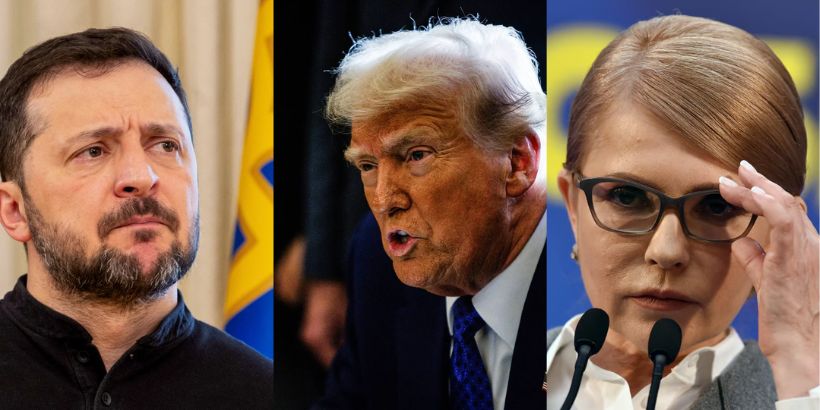
The waiver comes amid renewed tensions between Trump and Zelenskyy over Washington’s approach to the war.
Differences over sanctions, Russian fuel imports and military support have highlighted the challenges facing US-Ukraine relations as the conflict continues.
European Allies Monitor the Policy Shift
European governments are also watching the decision closely. Many have supported sanctions intended to reduce Russia’s ability to finance the war, and a significant change in US policy could complicate efforts to maintain a coordinated Western approach.
The response from European allies may depend on how broadly the waiver is applied and whether the administration restores any of the measures later.
Waiver Does Not Permanently Remove the Sanctions Framework
The executive action does not eliminate the underlying legislation. The administration retains the ability to reconsider its decision and activate measures later, subject to the law’s provisions and applicable procedures.
The waiver therefore changes the immediate implementation of the sanctions package without necessarily ending the broader framework.
Foreign Policy and Domestic Politics Intersect
Trump’s decision highlights the competing considerations facing Washington: maintaining economic pressure on Russia while limiting potential increases in energy costs for American consumers.
With the midterm elections approaching, the policy is likely to remain under scrutiny from lawmakers who disagree over the balance between sanctions enforcement, energy-market stability and US support for Ukraine.
Source – Reuters, Associated Press, Al Jazeera
Supreme News Network