
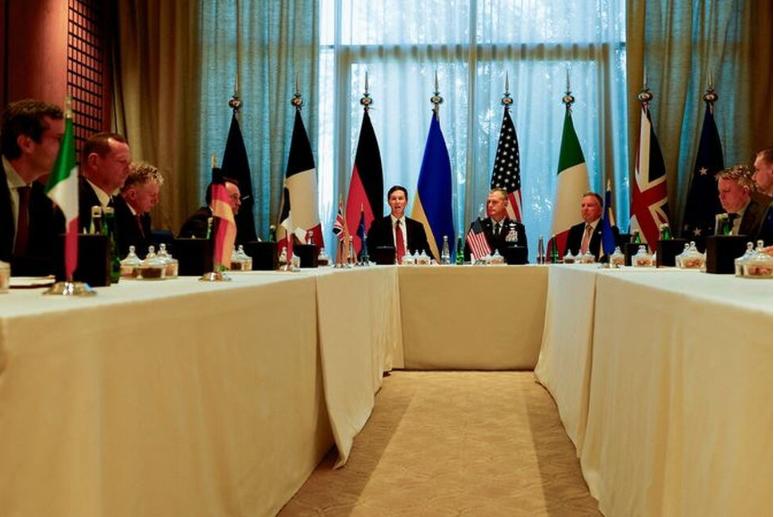
Abu Dhabi, November 10, 2026: Russia and Ukraine resumed direct peace negotiations in Abu Dhabi on Tuesday after a nine-month pause, with the United States attempting to broker an agreement to end the war that began with Russia’s full-scale invasion in February 2022.
The two-day negotiations, scheduled for November 10–11, bring together senior representatives from Moscow, Kyiv and Washington. The discussions focus on ending hostilities, security guarantees, territorial disputes and the broader security arrangements for Europe.
US officials have expressed hope that recent diplomatic contacts could help narrow disagreements. However, Russia and Ukraine remain deeply divided over several central issues, particularly the future of Ukrainian territory.
Peace Talks Resume After Nine Months
The latest round marks the first trilateral negotiations between Russia, Ukraine and the United States since talks in Geneva on February 17–18, 2026, failed to produce a breakthrough.
The meetings are taking place in Abu Dhabi, the capital of the United Arab Emirates, which has previously hosted diplomatic discussions involving the countries.
The renewed negotiations follow additional diplomatic efforts by Washington to bring both sides back to the table.
Officials are expected to continue discussions on Wednesday, November 11.
US Envoys Jared Kushner and Steve Witkoff Lead Mediation
The American delegation includes presidential envoys Jared Kushner and Steve Witkoff, who have been involved in efforts to reach a negotiated settlement.
Speaking at the opening of the meeting, Kushner said recent contacts had helped narrow differences between the two sides.
He indicated that President Donald Trump remained committed to finding a solution that could end the war and establish a more stable security environment.
However, the United States has not announced a final peace agreement or confirmed that the parties have accepted a common proposal.
Russia and Ukraine Send Senior Delegations
Russia’s delegation is led by presidential aide Vladimir Medinsky and includes senior diplomatic, military and intelligence officials.
Ukraine is represented by a delegation led by Rustem Umerov, the head of the country’s Foreign Intelligence Service.
Other Ukrainian representatives include senior officials involved in defence, security and political negotiations.
The participation of senior officials reflects the importance of the discussions, although neither Russian President Vladimir Putin nor Ukrainian President Volodymyr Zelenskyy is personally attending this round.
Territorial Disputes Remain Major Obstacle
One of the biggest disagreements concerns Russian-occupied Ukrainian territory.
Moscow continues to demand that Ukraine withdraw its forces from areas of the Donbas region that remain under Ukrainian control.
Russia has also maintained broader territorial claims concerning Ukrainian regions it declared annexed in 2022.
Ukraine has rejected demands to surrender territory that Russian forces have not captured.
Kyiv maintains that territorial questions must be addressed in accordance with Ukraine’s sovereignty and security interests.
The disagreement remains a central obstacle to any comprehensive settlement.
Ukraine Demands Strong Security Guarantees
Ukraine is seeking reliable international guarantees to prevent renewed Russian military action after any potential peace agreement.
President Zelenskyy has identified security guarantees as a crucial element of negotiations.
Kyiv is also pursuing discussions on a possible energy ceasefire, maritime security in the Black Sea and expanded prisoner exchanges.
Ukrainian officials have stressed that a lasting settlement must provide security rather than merely pause the fighting.
The precise nature of potential international guarantees remains under discussion.
Russia Pushes for Wider European Security Agreement
Russia has placed significant emphasis on establishing a broader security framework for Europe.
According to Reuters, a source in the Russian delegation said Moscow views negotiations over the continent’s future security arrangements as a central objective.
Russian officials have previously demanded restrictions on NATO expansion and changes to Europe’s security architecture.
Moscow also opposes certain military arrangements it considers threatening to Russian security.
These demands extend beyond the immediate conflict in Ukraine and involve questions affecting European countries and NATO.
European Leaders Seek Role in Negotiations
Representatives from France, Germany, Britain, Italy, the European Union and NATO are also expected to hold meetings in Abu Dhabi.
However, they are not participating as full members of the trilateral Russia-Ukraine-US negotiating format.
European officials are holding separate discussions with American and Ukrainian representatives.
European governments have argued that decisions affecting the continent’s security should involve the countries concerned.
They have also emphasised Ukraine’s sovereignty and the importance of a settlement consistent with international law.
Ceasefire Remains Uncertain
Ukraine and several European governments have supported a ceasefire as a step towards broader negotiations.
Russia has resisted proposals for an immediate general ceasefire without agreement on wider political and security conditions.
Moscow argues that a pause in fighting could allow Ukrainian forces to reorganise and replenish military supplies.
The opposing positions make an immediate ceasefire difficult to achieve.
Neither side has announced a new nationwide halt to military operations.
Fighting Continues Despite Renewed Diplomacy
The negotiations are taking place while military operations continue in Ukraine.
Russian attacks on Ukrainian energy infrastructure have raised concerns about electricity supplies as colder weather approaches.
Ukraine has also continued defending its territory and conducting military operations against Russian forces.
The continuing conflict adds urgency to the diplomatic talks but also demonstrates the gap between negotiations and conditions on the battlefield.
Civilian protection and humanitarian measures remain important issues for negotiators.
Prisoner Exchanges and Humanitarian Measures on Agenda
Apart from territorial and security questions, negotiators are expected to explore humanitarian steps that may be achievable even without a comprehensive agreement.
These include possible prisoner exchanges and arrangements intended to reduce attacks affecting civilian infrastructure.
Ukrainian officials have also raised the possibility of measures concerning shipping and energy facilities.
Such limited agreements could provide immediate benefits to affected populations.
However, no new prisoner exchange agreement or energy ceasefire had been confirmed at the opening of the talks.
What Happens Next in Abu Dhabi?
The talks are scheduled to continue through Wednesday, November 11.
Negotiators may attempt to identify areas of agreement and establish a framework for further discussions.
A future meeting involving national leaders has also been discussed as a possible step.
However, there is no confirmed date for a summit involving Trump, Putin and Zelenskyy.
Any comprehensive peace agreement would require decisions on territorial questions, military arrangements, sanctions and enforceable security guarantees.
Russia-Ukraine Peace Talks: Latest November 10 Update
The resumption of negotiations represents an important diplomatic development after nine months without direct US-mediated talks.
Washington says recent contacts have helped narrow disagreements, while Moscow and Kyiv continue to hold sharply different positions on fundamental issues.
Ukraine is seeking security guarantees and protection of its sovereignty, while Russia is pressing for territorial concessions and a wider European security settlement.
As the first day of discussions continues, no ceasefire or final peace agreement has been announced.
The outcome of the November 10–11 meetings will help determine whether the renewed diplomatic process can make progress towards ending the conflict.
Sources: Reuters, November 10, 2026; The Kyiv Independent; Anadolu Agency; Deutsche Welle; The Washington Post
Supreme News Network