
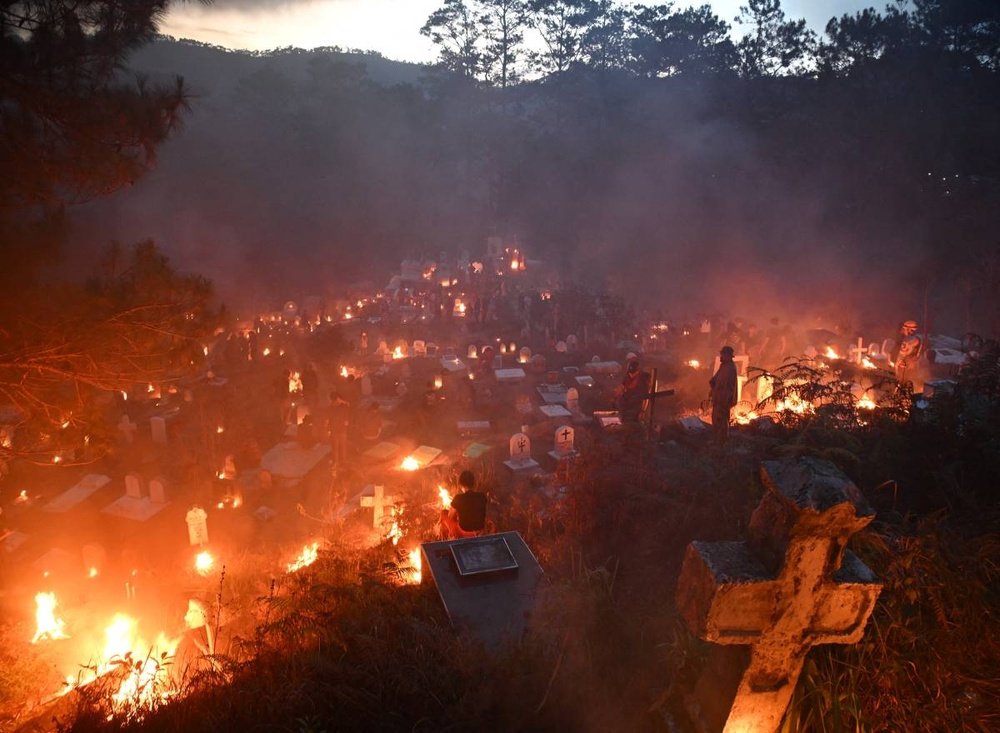
Sagada, November 2, 2026: Residents of the mountain town of Sagada in the northern Philippines marked All Saints’ Day with the traditional Panag-aapoy ritual, lighting pinewood fires beside graves to honour departed loved ones. The centuries-old-looking ceremony has in fact been observed in its present form for about 122 years and remains one of Sagada’s most distinctive cultural traditions.
Pinewood Fires Light Up the Cemetery
As darkness fell over Sagada’s four-hectare cemetery, families lit bundles of aromatic pinewood beside graves, creating a glow across the burial ground.
The cemetery is home to more than 2,000 graves, and the fires are meant to symbolise remembrance, prayer and continued connection with the dead.
Tradition Known as Panag-aapoy
The ritual is locally known as Panag-aapoy, meaning “to light a fire”.
According to local church officials, the custom developed after Protestant missionaries encouraged Christian burial and the lighting of graves after the arrival of American influence in the region at the end of the 19th century.
Pinewood Replaced Expensive Candles
Sagada’s early Christians used pinewood because candles were costly and easily extinguished by strong mountain winds.
The resin-rich local pine burns quickly and gives off a strong fragrance, becoming a defining part of the ceremony over generations.
Families Honour Graves Even Without Relatives Present
Residents traditionally light pine sticks not only for their own relatives but also for graves that may have no visitors.
For many families, the night is less about spectacle and more about prayer, remembrance and maintaining a connection with departed family members.
Tourism Brings New Concerns
Panag-aapoy has become increasingly popular with visitors, but residents and church leaders have warned that growing tourism can affect the solemnity of the ritual.
Local authorities have introduced restrictions including bans on drone photography, picnic mats and disruptive behaviour near the graves.
Authorities Stress That It Is Not a Festival
The Philippine tourism ministry has emphasised that Panag-aapoy is a sacred cultural tradition, not a festival or tourist event.
Visitors are encouraged to observe quietly, avoid intrusive photography and respect families taking part in the ceremony.
Sagada Also Known for Hanging Coffins
Before Christian burial practices became widespread, communities around Sagada were known for placing coffins in caves or suspending them from cliffs.
Some of these famous hanging coffins can still be seen around the town, reflecting older beliefs about the journey of the dead and the ancestral realm.
Tradition Continues to Define Sagada’s Cultural Identity
The annual fire ritual remains a powerful blend of indigenous tradition and Christian belief.
For residents, Panag-aapoy continues to serve as a deeply personal act of remembrance while also representing Sagada’s distinctive cultural identity.
Source: AFP, ABS-CBN News, The Straits Times, UCA News
Supreme News Network