NEW DELHI | August 20, 2026
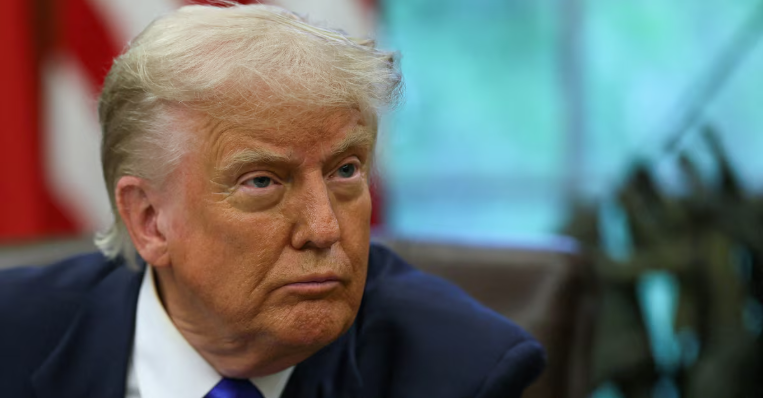
Trump Announces “Economic D-Day” Against Iran
US President Donald Trump has issued a fresh warning to countries, financial institutions and businesses that continue to provide economic support to Iran, threatening severe consequences as Washington steps up pressure on Tehran.
Trump described the planned campaign as “Economic D-Day” and warned that countries helping Iran could face unprecedented economic measures. The announcement came amid continuing tensions over the conflict and disruptions around the Strait of Hormuz, a crucial route for global energy shipments.
Why India Is Under the Spotlight
The warning has particular significance for India because Indian businesses maintain trade links with Iran.
India exports several products to the Iranian market, including basmati rice, tea, sugar, fresh fruits, pharmaceuticals, spices and other food products, according to information cited by Indian officials.
Any expansion of US sanctions or secondary economic measures against companies dealing with Iran could therefore create additional uncertainty for Indian exporters.
Indian Exporters Could Face Higher Costs
The immediate impact on Indian exporters would depend on the nature and scope of any measures Washington ultimately introduces.
Businesses with direct exposure to Iran could face payment difficulties, higher shipping and insurance costs, and weaker demand if economic restrictions become more severe.
However, there is currently no confirmed US announcement imposing a new blanket penalty specifically on Indian exports as a result of this latest warning.
Strait of Hormuz Adds to Trade Risks
The threat comes as the conflict continues to disrupt shipping through the Strait of Hormuz, one of the world’s most important energy corridors.
Any prolonged disruption could affect shipping costs and energy prices, potentially increasing expenses for importers and exporters across Asia. The continuing uncertainty has already contributed to volatility in global oil markets.
For India, which relies heavily on imported energy, higher transportation and fuel costs could have consequences beyond its direct trade with Iran.
China Faces a Bigger Exposure
While India’s Iran trade is attracting attention, China is potentially far more exposed to any secondary sanctions because it remains Iran’s largest oil customer.
Reuters-cited data indicate that China accounted for more than 80% of Iran’s shipped oil purchases in 2025, making Beijing a major test for Washington’s new economic pressure strategy.
Any confrontation over Iranian oil trade could therefore extend beyond Iran and the United States and create wider consequences for global commerce.
UAE Suspends Trade With Iran
The pressure on Iran has already produced a major regional development.
The United Arab Emirates has suspended trade and financial transactions with Iran after renewed missile attacks, according to reports. The UAE had previously been an important commercial and re-export hub for Iranian trade.
The move could further restrict Iran’s access to regional trading channels.
Iran Rejects Trump’s Threat
Iran has rejected Trump’s latest warning.
Iranian Foreign Minister Abbas Araqchi dismissed the proposed economic campaign and accused Washington of using economic pressure as a form of “economic terrorism.” Tehran has continued to signal that it is open to dialogue while rejecting conditions it considers equivalent to surrender.
What It Means for India
For India, the immediate concern is not simply the volume of direct India-Iran trade but the secondary effects of a wider economic confrontation.
Indian exporters could face additional compliance requirements, payment complications and higher logistics costs if Washington expands sanctions to businesses and financial institutions dealing with Iran.
At the same time, India’s diversified export markets could help limit the broader impact on the country’s overall merchandise trade.
Economic Pressure Could Reshape Regional Trade
Trump’s latest warning represents a significant escalation in the economic dimension of the US-Iran confrontation.
If Washington moves from warnings to broad secondary sanctions, countries maintaining commercial relationships with Tehran—including major Asian economies—could face difficult choices.
For Indian exporters, the next steps from Washington will be crucial in determining whether the latest threat remains diplomatic pressure or develops into measures with a direct impact on trade.
Source: Reuters, NDTV, Associated Press, Gulf Business, Times of India.
Original Report: Supreme News Network (SSN)


Amazing graphics and very responsive controls. It feels like a premium experience on my phone. Get the phokplayapp now.
[2987]888bet লগইন ও অ্যাপ ডাউনলোড | বিকাশ ক্যাসিনো ডিপোজিট,888bet লগইন করুন এবং অনলাইন স্লট গেম খেলার নিয়ম শিখে নিন। বিকাশ দিয়ে ক্যাসিনো ডিপোজিট করে সহজেই আপনার প্রিয় গেমগুলো উপভোগ করতে আজই যোগ দিন। visit: 888bet