
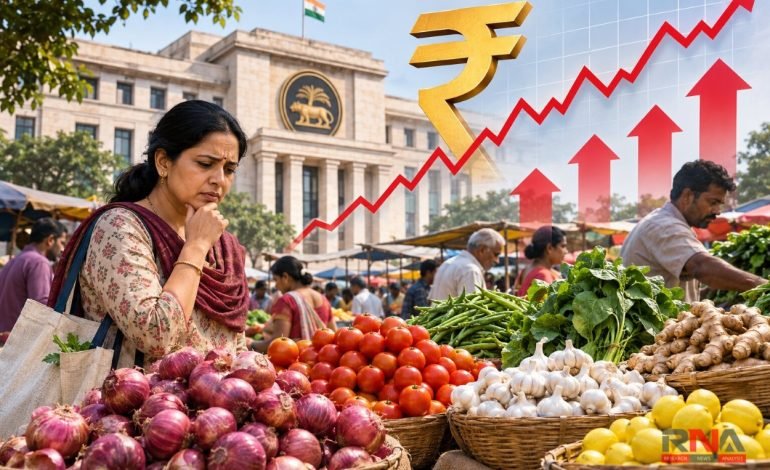
New Delhi, November 13, 2026: India’s retail inflation climbed to 6.09% in October 2026, crossing the Reserve Bank of India’s (RBI) upper tolerance limit of 6% for the first time in two years, according to government data released on November 12.
The increase was primarily driven by rising food prices, raising concerns over household expenses and strengthening expectations of another interest rate hike in December.
Retail Inflation Reaches Two-Year High
According to the Ministry of Statistics and Programme Implementation (MoSPI), Consumer Price Index (CPI) inflation increased from 5.54% in September to 6.09% in October.
The latest figure exceeded the RBI’s medium-term inflation target of 4%, which allows a tolerance range between 2% and 6%.
Inflation has remained above the central bank’s 4% target for five consecutive months.
Food Prices Drive Inflation Higher
Food inflation rose sharply to 8.94% in October from 7.74% in September.
Prices of essential food items, including onions, garlic, ginger and lemons, recorded significant increases.
The latest government figures showed onion prices rising by 116.22%, garlic by 60.74%, ginger by 48.32% and lemons by 47.30% compared with the previous year.
The rising cost of everyday groceries has added pressure on household budgets, particularly for lower-income families.
Rural Inflation Higher Than Urban Inflation
Government data also revealed a difference between inflation levels in rural and urban India.
Rural retail inflation reached 6.63% in October, while urban inflation stood at 5.41%.
Food inflation was recorded at 9.09% in rural areas and 8.68% in urban regions.
The figures indicate that rising prices are affecting consumers across the country, with rural households experiencing greater overall inflation.
RBI May Consider Interest Rate Hike in December
The latest inflation data has increased expectations that the RBI could raise its benchmark repo rate during its December 2–4 monetary policy meeting.
The central bank increased the repo rate by 25 basis points to 5.50% in October 2026.
Several economists now expect another 25-basis-point increase in December to control inflationary pressure.
However, no decision has been announced, and the RBI will also consider economic growth, global commodity prices and other indicators.
Impact on Loans and Household Spending
If the RBI raises interest rates again, borrowing costs for home loans, personal loans and business loans could increase, depending on lenders’ interest rate policies.
Higher borrowing costs may affect consumer spending and business investment.
Meanwhile, continued food inflation could reduce household purchasing power and increase the cost of living.
Inflation Outlook Remains Uncertain
Economists have warned that inflation could remain elevated over the coming months due to food supply pressures, global commodity prices and higher input costs.
However, declining crude oil prices and government measures to improve food availability could provide some relief.
The October inflation reading will be an important factor in the RBI’s upcoming monetary policy decision.
Supreme News Network