

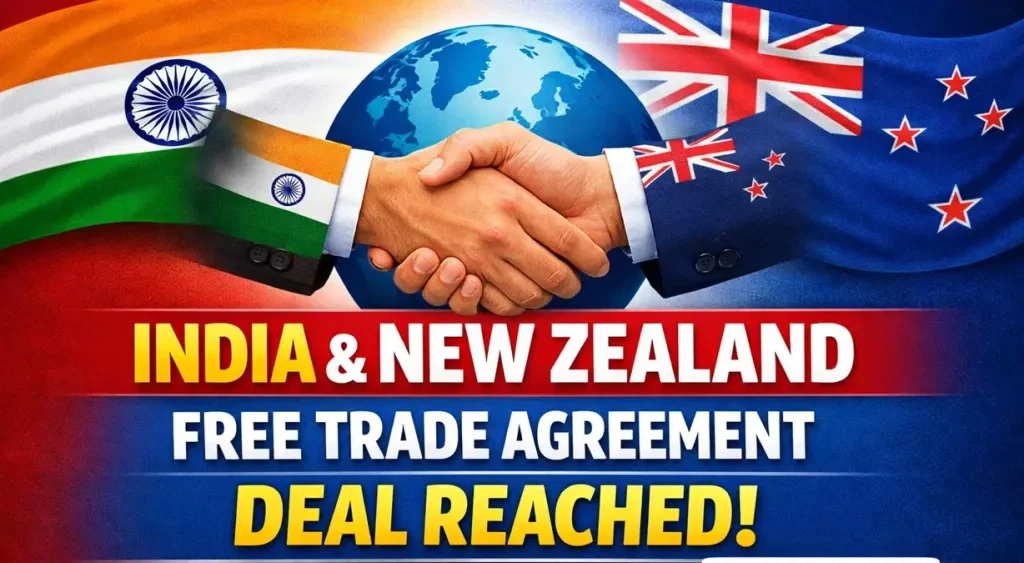
Auckland, July 11: India and New Zealand have signed multiple agreements aimed at expanding bilateral trade, encouraging investment and strengthening long-term economic cooperation during Prime Minister Narendra Modi’s official visit to New Zealand. The agreements were finalised following high-level discussions between Prime Minister Narendra Modi and New Zealand Prime Minister Christopher Luxon, as both countries elevated their relationship to a Comprehensive Strategic Partnership and unveiled a Roadmap to 2030.
Government officials described the agreements as an important step towards creating stronger commercial ties and unlocking new opportunities for businesses, investors and entrepreneurs in both countries.
New Momentum for Economic Partnership
Economic cooperation was one of the central themes of the bilateral summit.
Both leaders agreed that closer collaboration in trade and investment would play a key role in strengthening overall bilateral relations.
The agreements aim to:
- Expand two-way trade.
- Encourage greater foreign investment.
- Improve business connectivity.
- Promote innovation and technology partnerships.
- Strengthen supply-chain resilience.
- Support sustainable economic growth.
Officials said both governments would work closely with industry stakeholders to ensure effective implementation of the agreements.
Focus on Trade Expansion
India and New Zealand agreed to deepen commercial engagement across a range of sectors.
Priority areas identified during the discussions include:
- Agriculture and food processing
- Renewable energy
- Advanced manufacturing
- Infrastructure development
- Logistics and supply chains
- Digital services
- Tourism
- Healthcare
- Education
Business representatives from both countries welcomed the agreements, saying they would create fresh opportunities for exports, investment and joint ventures.
Investment Cooperation
The agreements encourage stronger investment flows between India and New Zealand.
Both governments expressed their commitment to creating a favourable business environment by promoting:
- Private-sector partnerships
- Startup collaboration
- Innovation ecosystems
- Infrastructure investment
- Technology-driven enterprises
Officials believe stronger investment cooperation will benefit businesses operating in both markets while generating employment and supporting economic growth.
Innovation and Technology
Technology and innovation also featured prominently during the summit.
India and New Zealand agreed to strengthen cooperation in areas such as:
- Artificial intelligence
- Digital governance
- Financial technology
- Research and development
- Startup ecosystems
- Emerging technologies
The collaboration is expected to encourage knowledge sharing and support innovation-led economic development.
Support for Small Businesses
Both countries acknowledged the important role played by micro, small and medium enterprises (MSMEs) in generating employment and driving economic activity.
The agreements aim to provide greater opportunities for smaller businesses to participate in bilateral trade by improving market access and encouraging business networking initiatives.
Industry associations are expected to play an active role in facilitating commercial partnerships.
Comprehensive Strategic Partnership
The economic agreements form part of the broader Comprehensive Strategic Partnership announced during Prime Minister Modi’s visit.
The partnership also covers:
- Defence and security
- Maritime cooperation
- Education
- Climate action
- Critical minerals
- Cultural exchanges
- People-to-people ties
Both governments stated that stronger economic engagement would remain one of the key pillars of the strategic partnership.
Looking Ahead
Officials from India and New Zealand expressed confidence that the newly signed agreements would significantly strengthen bilateral economic relations over the coming years.
Regular meetings between government agencies, business organisations and industry representatives will be organised to monitor implementation and identify additional areas of cooperation.
The agreements, together with the Roadmap to 2030, are expected to create new opportunities in trade, investment and innovation while reinforcing the growing partnership between the two Indo-Pacific democracies.
Source: Ministry of External Affairs (MEA), Government of India
Original Report:
https://www.mea.gov.in/
https://www.pmindia.gov.in/
Supreme News Network


Home swingers party picturesTeen anl cum shotNadezda kiska girl nakedTeachers sex tapeMovie star sex sceneSimple vintage
bridal setPictures of halle berry nude xnxx Over her knee femdomHot bitches
get fucked picsTgp xxx links jjjLive escorts in budapest hungaryFucking
with my wife’s dildoFemale free gallery nude photoNetporn handjob https://xxxxlulu.com/ Women large clitorisVoyeur upload downloadTopless clothed handjobsDick gore rv world richmond hillBritney preview sex tapeSexiest slutsSoftware
pair thumb driveBig ben porno starMarried man fucking maid
porno xnxx Naked mature nylonsHot sexy girls in wilmintong ncFree streaming lesbians rubbing pussiesTaylor rain gettin fuckedGay
job sexBig black dick and asian girlsFantasia nude picturesAge sexual concent worldBarbara
rush nudeJapanese girl lesbianAdoption of adult
in nysFree young models nn xxxSex slave party galleriesTwo women describe losing their virginity to a dogMoms fucking creampieMature man for man