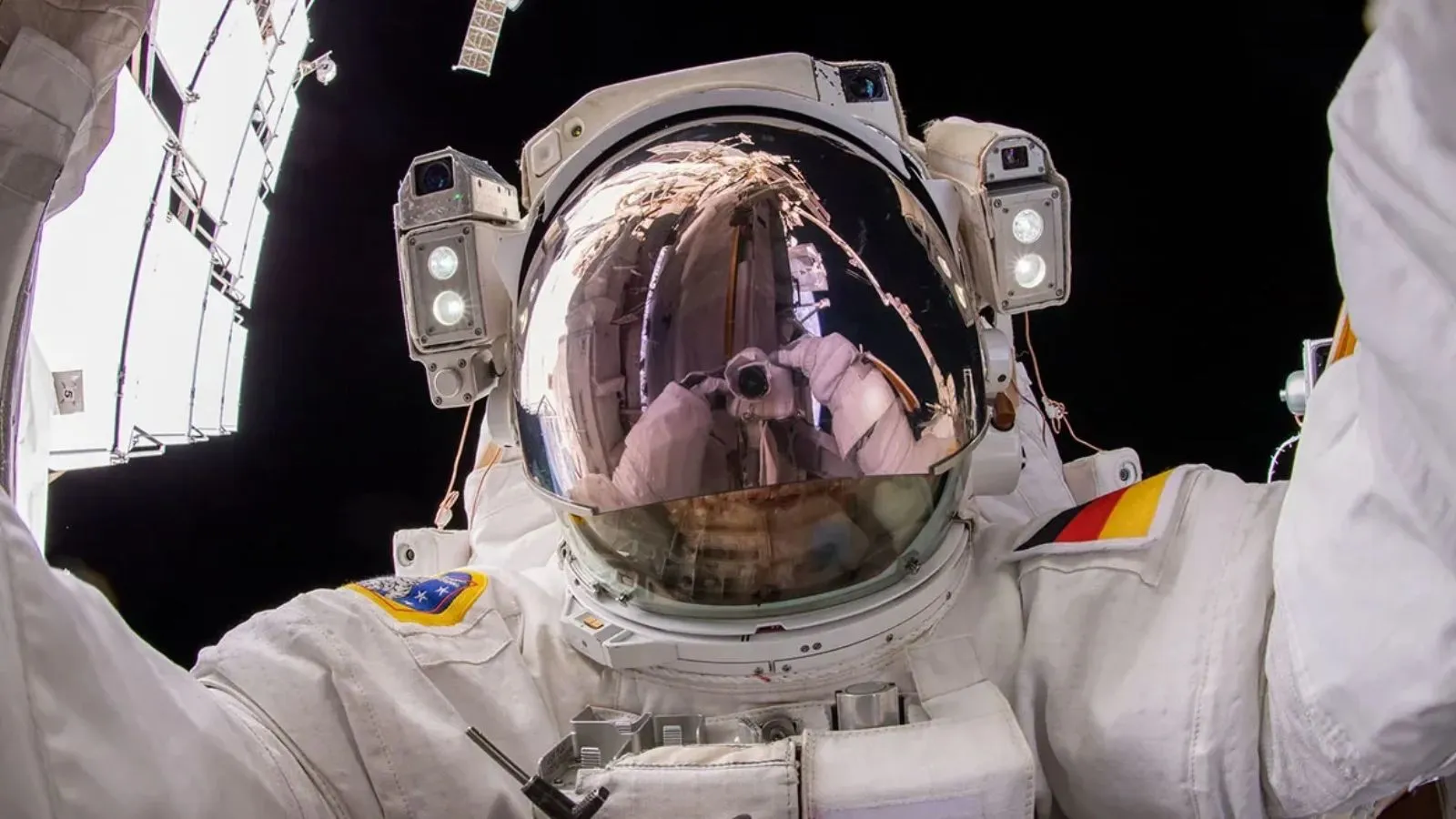
Beijing, November 24, 2026: China has announced the crew for its upcoming Shenzhou-24 space mission, which will carry Pakistani astronaut Muhammad Zeeshan Ali to the Tiangong space station, making him the first foreign national scheduled to visit China’s orbiting laboratory.
The China Manned Space Agency (CMSA) confirmed on Tuesday that the spacecraft will launch on November 25, 2026, at 8:18 AM Beijing time from the Jiuquan Satellite Launch Center in northwestern China.
The three-member crew includes Chinese astronauts Tang Hongbo and Wu Yi, alongside Pakistani payload specialist Muhammad Zeeshan Ali.
The mission represents an important milestone in China’s human spaceflight programme and its growing international cooperation in space exploration.
Ali is expected to spend approximately one week aboard Tiangong, conducting scientific experiments before returning to Earth aboard the Shenzhou-23 spacecraft.
The announcement follows a space cooperation agreement signed between China and Pakistan in February 2025.
China Announces Shenzhou-24 Space Mission Crew
China’s space authorities officially unveiled the Shenzhou-24 crew on November 24, one day before the scheduled launch.
The mission will be commanded by veteran Chinese astronaut Tang Hongbo.
Wu Yi will serve as flight engineer, while Pakistan’s Muhammad Zeeshan Ali will join as a payload specialist.
According to CMSA, the crew has completed its training and is in good condition ahead of the launch.
Preparations involving the spacecraft, launch vehicle and supporting systems have also been completed.
The mission is scheduled to lift off aboard a Long March-2F carrier rocket.
If successful, it will become the first Chinese crewed spaceflight to include an astronaut from another country.
Pakistani Astronaut Zeeshan Ali to Make History
Muhammad Zeeshan Ali, 40, is preparing to become the first Pakistani astronaut to travel into orbit.
He will also become the first foreign national to visit China’s Tiangong space station.
Ali is a former pilot in Pakistan’s armed forces who was selected for the mission through a bilateral astronaut cooperation programme.
His participation marks an important achievement for Pakistan’s emerging human spaceflight ambitions.
The astronaut has undergone extensive training in China, covering spacecraft operations, emergency procedures, scientific experiments and life aboard the space station.
His responsibilities during the mission will focus primarily on conducting scientific research and supporting station operations.
The mission will provide Pakistan with an opportunity to participate directly in human spaceflight research.
Shenzhou-24 Launch Scheduled for November 25
The Shenzhou-24 spacecraft is scheduled to launch on Wednesday, November 25, 2026.
The launch will take place at the Jiuquan Satellite Launch Center in China’s Gansu province.
According to Chinese authorities, liftoff is planned for 8:18 AM Beijing time.
This corresponds to 5:48 AM Indian Standard Time and 5:18 AM Pakistan Standard Time.
The spacecraft will be carried into orbit by a Long March-2F rocket, which has been used for China’s crewed space missions.
Following launch, Shenzhou-24 will travel towards Tiangong and dock with the orbiting station.
The planned launch remains subject to final operational and weather conditions.
Who Are the Three Shenzhou-24 Astronauts?
The mission includes two Chinese astronauts and one Pakistani astronaut.
Tang Hongbo — Mission Commander
Tang Hongbo, 51, is an experienced Chinese astronaut who previously participated in two space missions.
Shenzhou-24 will mark his third visit to the Tiangong space station.
He will lead the crew and oversee the mission’s principal operations.
Wu Yi — Flight Engineer
Wu Yi, 39, will serve as the mission’s flight engineer.
He will support spacecraft operations, technical activities and other responsibilities during the mission.
Muhammad Zeeshan Ali — Payload Specialist
Muhammad Zeeshan Ali, 40, will represent Pakistan as the mission’s international payload specialist.
He will conduct scientific experiments and participate in daily activities aboard the space station.
His selection represents the first inclusion of a foreign astronaut in China’s operational crewed space programme.
Pakistani Astronaut to Spend Around One Week in Space
Unlike the two Chinese crew members, Zeeshan Ali is scheduled to undertake a short-duration mission.
He is expected to spend approximately one week aboard the Tiangong space station.
During this period, he will participate in experiments and cooperate with Chinese astronauts.
After completing his assigned activities, Ali is scheduled to return to Earth aboard the Shenzhou-23 spacecraft.
The spacecraft has been docked at Tiangong since May 2026.
The arrangement will allow the Pakistani astronaut to complete a short orbital visit while the incoming Chinese crew continues its longer assignment.
Scientific Experiments Planned During Mission
Scientific research will be a major objective of the Shenzhou-24 mission.
According to Chinese state broadcaster CCTV, Zeeshan Ali will participate in four scientific projects involving biotechnology and materials research.
One planned experiment will examine photosynthetic microorganisms in the space environment.
Researchers study such organisms to better understand biological processes under microgravity conditions.
Scientific experiments aboard space stations can contribute to research involving biology, materials and technologies designed for future space missions.
The broader Shenzhou-24 mission is expected to support approximately 90 scientific and operational experiments.
The Pakistani astronaut will primarily focus on research activities connected to China-Pakistan scientific cooperation.
China and Pakistan Signed Space Agreement in February 2025
The upcoming mission is based on a bilateral cooperation agreement signed in February 2025.
The agreement involved the China Manned Space Agency and Pakistan’s Space and Upper Atmosphere Research Commission, known as SUPARCO.
Under the arrangement, Pakistan was given an opportunity to select astronaut candidates for training in China.
Two Pakistani candidates, Muhammad Zeeshan Ali and Khurram Daud, were selected to begin specialised training.
Following the selection process, Ali was chosen to participate in the Shenzhou-24 mission.
The programme reflects expanding cooperation between the two countries in scientific research and space technology.
Zeeshan Ali Shares Experience of Astronaut Training
Speaking ahead of the mission, Muhammad Zeeshan Ali expressed appreciation for the training and support provided by Chinese space authorities.
He said his experience at the Astronaut Centre of China had helped him develop important spaceflight skills.
The training programme included practical preparation for living and working in orbit.
Ali also studied the Chinese language to improve communication with his fellow crew members.
He described the mission as a significant achievement for Pakistan and a result of cooperation between the two countries.
His participation has attracted attention from Pakistan’s political leadership and scientific community.
Pakistan Government Welcomes Historic Space Mission
Pakistan’s government has welcomed Zeeshan Ali’s selection for the Shenzhou-24 mission.
Planning Minister Ahsan Iqbal congratulated the astronaut and highlighted the importance of scientific cooperation between Islamabad and Beijing.
Information Minister Attaullah Tarar also expressed appreciation for the milestone.
Earlier in 2026, Prime Minister Shehbaz Sharif met the two Pakistani astronaut candidates selected for training.
He described the programme as an important development for Pakistan’s scientific ambitions.
The upcoming flight is expected to encourage greater interest in space research and related technical education.
What Is China’s Tiangong Space Station?
Tiangong is China’s permanently crewed space station operating in low Earth orbit.
Its name translates to “Heavenly Palace”.
The station supports scientific research, technological experiments and long-duration human spaceflight missions.
It consists of the Tianhe core module and two laboratory modules, Wentian and Mengtian.
Chinese astronauts have conducted regular crew rotations at the station since 2021.
Most operational missions involve three astronauts spending approximately six months in orbit.
The station provides China with an independent platform for research and human spaceflight operations.
Shenzhou-24 will represent an important milestone because it is expected to bring the station’s first international visitor.
Shenzhou-24 to Replace Shenzhou-23 Crew
One of the mission’s main objectives is to complete a crew rotation aboard Tiangong.
The incoming Shenzhou-24 astronauts will join the existing crew already stationed in orbit.
During the handover period, the astronauts will exchange operational responsibilities and review ongoing scientific activities.
Muhammad Zeeshan Ali will complete his short-duration assignment before returning to Earth with two members of the outgoing Shenzhou-23 crew.
Chinese astronaut Zhu Yangzhu, who is part of the Shenzhou-23 mission, is expected to remain in orbit for an extended assignment.
According to Chinese authorities, Zhu’s mission will contribute to the country’s efforts to conduct its first year-long stay in space.
The arrangement demonstrates China’s increasing experience in managing overlapping crew missions.
China Expands International Cooperation in Space
The inclusion of a Pakistani astronaut represents an expansion of China’s international human spaceflight programme.
Until now, China’s operational Shenzhou missions have carried Chinese nationals.
By welcoming a foreign astronaut, Beijing is demonstrating its willingness to involve international partners in activities aboard Tiangong.
Pakistan is among China’s closest diplomatic and strategic partners.
Their cooperation extends across infrastructure, trade, defence, technology and scientific research.
Space exploration has become another important area of bilateral engagement.
The mission could provide a framework for future international participation in China’s space station programme.
China’s Space Programme Targets Moon Landing by 2030
China has expanded its space exploration activities significantly over recent years.
Its programme includes crewed missions, lunar exploration, planetary research and space station operations.
Beijing is also working towards landing Chinese astronauts on the Moon before 2030.
The goal forms part of a broader effort to develop advanced human spaceflight capabilities.
The United States is also pursuing crewed lunar missions through NASA’s Artemis programme.
As major space agencies expand their exploration plans, international partnerships are becoming increasingly important.
China’s decision to include a Pakistani astronaut aboard Shenzhou-24 represents another development in this changing environment.
Why Shenzhou-24 Matters for Pakistan
The mission represents an important step in Pakistan’s participation in space exploration.
Although Pakistan has operated satellites and undertaken space-related research, it has not previously sent a national into orbital spaceflight.
The Shenzhou-24 mission will provide its astronaut with direct experience of scientific research in orbit.
The knowledge gained may support future training programmes and research partnerships.
It could also encourage students to pursue careers involving aerospace engineering, physics, biology and other scientific disciplines.
However, the mission is being conducted using Chinese launch infrastructure and spacecraft, rather than an independently developed Pakistani crewed system.
What Happens Next Before the Shenzhou-24 Launch?
The crew has completed its principal training and final preparations ahead of the scheduled launch.
Chinese authorities will conduct the remaining pre-launch checks involving the spacecraft and rocket.
The mission is planned to lift off on November 25 from Jiuquan.
Following a successful launch and docking, the incoming astronauts will begin their activities aboard Tiangong.
Muhammad Zeeshan Ali will conduct his assigned scientific experiments during the short-duration visit.
His return is planned aboard Shenzhou-23, while the Chinese crew members continue their mission.
The actual launch, docking and return milestones will require confirmation from Chinese space authorities once completed.
China Shenzhou-24 Mission: Key Highlights
China has announced the three-member crew for the Shenzhou-24 space mission scheduled for November 25, 2026.
The spacecraft will carry Chinese astronauts Tang Hongbo and Wu Yi alongside Pakistani payload specialist Muhammad Zeeshan Ali.
Ali is expected to become the first foreign national to visit China’s Tiangong space station and the first Pakistani to travel into orbit.
The mission is scheduled to launch at 8:18 AM Beijing time aboard a Long March-2F rocket from the Jiuquan Satellite Launch Center.
The Pakistani astronaut will spend approximately one week in space, participating in scientific experiments involving biotechnology and materials research.
He is scheduled to return to Earth aboard Shenzhou-23 after completing his assignment.
The mission follows a China-Pakistan space cooperation agreement signed in February 2025.
It marks an important development in international cooperation involving China’s crewed space programme.
Source – Reuters (November 24, 2026), Associated Press (AP), China Manned Space Agency (CMSA), Xinhua News Agency, CCTV, Dawn (November 24, 2026)
Supreme News Network