
Baghdad, November 9, 2026: Iraq has reached an understanding with the United States to facilitate Iraqi oil exports through the strategically important Strait of Hormuz using a shipping route near Oman, according to Iraqi Foreign Minister Fuad Hussein.
Speaking in an interview with Al Jazeera, Hussein said Iraq had suffered an estimated $60 billion in losses due to the ongoing Iran war and disruptions to its oil exports.
The development comes as Iraq seeks to protect its petroleum revenues and maintain energy shipments amid continuing regional instability.
Iraq and US Reach Understanding on Oil Shipments
Foreign Minister Fuad Hussein confirmed that Baghdad and Washington had reached understandings concerning the movement of Iraqi oil through the Strait of Hormuz.
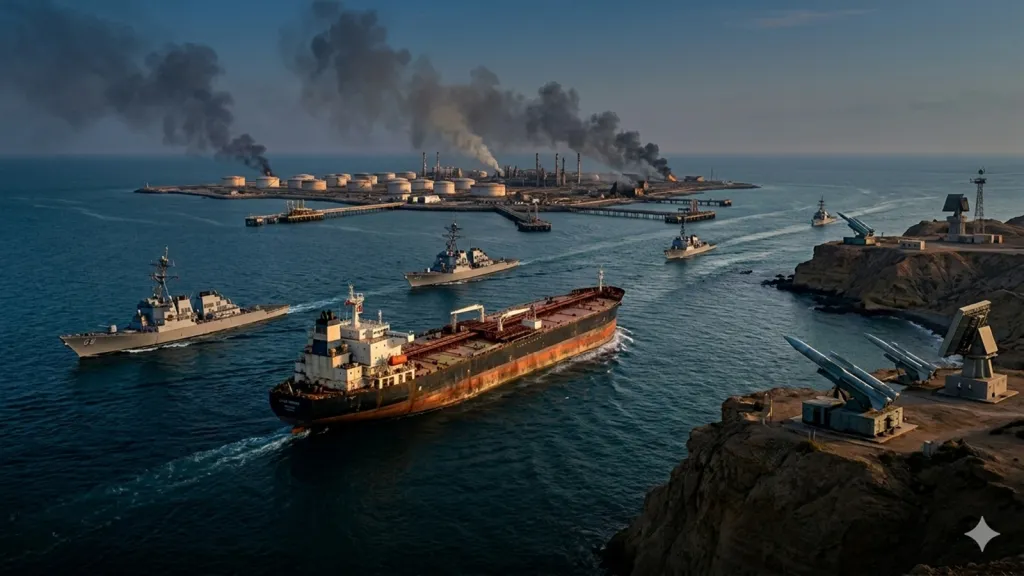
The arrangement involves a shipping lane near Oman, providing a possible route for Iraqi crude exports during the continuing disruption to Gulf maritime trade.
The Strait of Hormuz connects the Persian Gulf to the Gulf of Oman and the Arabian Sea, making it one of the world’s most important passages for international energy shipments.
However, the precise operational details of the understanding have not been publicly disclosed.
It is also unclear how many Iraqi oil tankers will use the route or whether additional arrangements will be required to ensure their safe passage.
Iraq Reports $60 Billion in War-Related Losses
Hussein said Iraq’s losses resulting from the Iran war and interruptions to petroleum exports had reached approximately $60 billion.
The figure highlights the financial pressure facing an economy heavily dependent on oil revenue.
Disruptions to crude exports can reduce government income, affect public spending and create uncertainty for businesses.
The foreign minister did not provide a detailed breakdown of the $60 billion estimate during the remarks reported by Reuters.
The amount should therefore be understood as the Iraqi government’s stated estimate rather than an independently audited total.
Iraqi Oil Exports Recover in October
Despite the financial damage, Iraq’s petroleum exports improved significantly in October.
According to Iraqi energy officials, average daily crude exports increased from approximately 2.65 million barrels in September to 3.5 million barrels in October.
| Month | Average oil exports |
|---|---|
| September 2026 | 2.65 million barrels per day |
| October 2026 | 3.50 million barrels per day |
| Increase | 850,000 barrels per day |
The increase represents an improvement of approximately 32%.
The recovery suggests that Iraq managed to restore part of its export capacity despite continuing regional risks.
However, the higher October figure does not mean that all shipping restrictions or financial losses have been resolved.
Why the Strait of Hormuz Matters
The Strait of Hormuz is a critical maritime passage for oil and liquefied natural gas shipments from Gulf producers.
Countries including Iraq, Saudi Arabia, Kuwait, Qatar and the United Arab Emirates depend on regional shipping infrastructure to reach international energy markets.
The ongoing conflict involving Iran has disrupted maritime operations and heightened concerns about the safety of commercial vessels.
Restrictions on shipping through the strait can affect oil producers, importing countries, freight operators and global energy prices.
For Iraq, reliable access to export routes is particularly important because petroleum sales form a major part of government revenue.
US Pressures Iraq Over Border Trade With Iran
During the same interview, Hussein also discussed pressure from Washington concerning Iraq’s border crossings with Iran.
According to his remarks, the US Treasury has asked Iraq to close all border crossings with Iran except two as part of its efforts to increase economic pressure on Tehran.
One of the proposed exceptions is located in Iraq’s Kurdistan region.
Hussein explained that Iraq has numerous official and unofficial crossings with Iran, making a broad closure difficult to implement.
He also warned that restricting the crossings could negatively affect the Iraqi economy.
Baghdad and Washington remain in discussions about the issue.
Iraq Faces Difficult Economic Decisions
Iraq’s government must balance its economic relationship with Iran against its ties with the United States.
Iran is an important regional trading partner, while Washington plays a significant role in international financial and sanctions arrangements.
The dispute over border crossings adds another challenge for Baghdad as it attempts to maintain economic activity during the regional conflict.
At the same time, securing oil-export routes remains essential for protecting government finances.
Alternative Oil Export Routes Gain Importance
The war has increased interest in export infrastructure that can reduce dependence on the Strait of Hormuz.
Iraq and regional partners have examined alternative pipelines and transportation routes to reach international markets.
However, developing new export infrastructure requires investment, security arrangements and cooperation between governments.
The understanding concerning the shipping lane near Oman may provide additional flexibility, but the extent of its practical impact remains to be seen.
What Happens Next?
Further details are expected regarding the operation of the proposed shipping arrangement and its ability to support regular Iraqi oil exports.
The durability of the understanding will depend partly on regional security conditions and continued coordination between the relevant parties.
Iraq will also need to address Washington’s concerns about its commercial border crossings with Iran.
For now, Hussein’s announcement represents a diplomatic development intended to support Iraqi energy exports during a period of major economic uncertainty.
Iraq Seeks to Protect Oil Revenue Amid Regional Conflict
Iraq’s understanding with the United States comes as the country attempts to recover from serious economic disruption caused by the Iran war.
With losses estimated by its foreign minister at $60 billion, maintaining petroleum exports has become an urgent financial priority.
The recovery in October shipments offers some relief, but security challenges around the Strait of Hormuz continue.
The latest discussions highlight Iraq’s efforts to safeguard its economy while navigating competing regional and international pressures.
Source: Reuters, November 8, 2026; Al Jazeera interview with Iraqi Foreign Minister Fuad Hussein; The Economic Times, November 9, 2026
Supreme News Network