

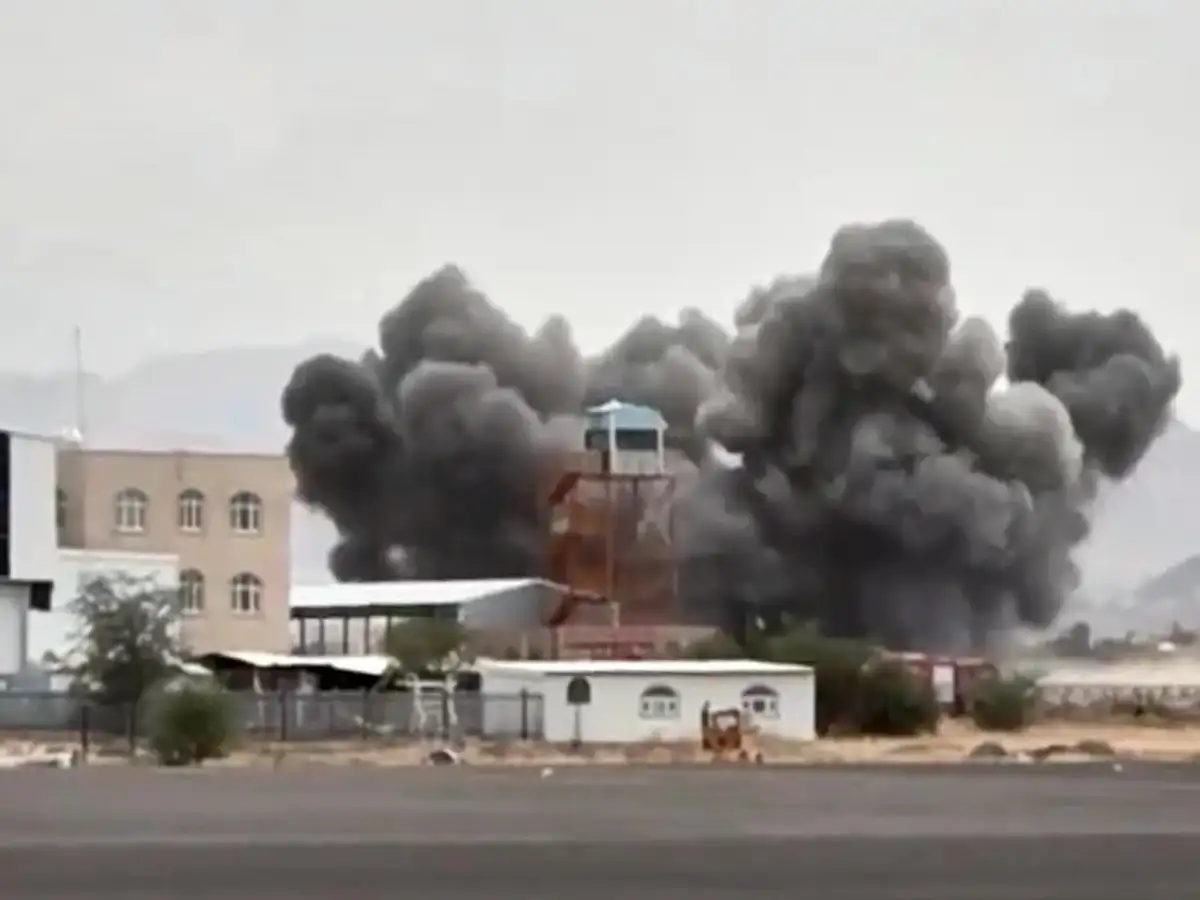
Sanaa, November 7, 2026: At least 30 people were reportedly killed and eight others injured in an attack on a busy market in Yemen’s southwestern Taiz province on Friday, November 6, according to health officials associated with the Houthi movement.
The Houthis accused Saudi Arabia of carrying out airstrikes on the market, while authorities aligned with Yemen’s internationally recognised government blamed the rebels for the attack.
The conflicting accusations have raised concerns over the safety of civilians as fighting intensifies in the region. The Associated Press said it could not independently verify either side’s account of who was responsible.
Attack Hits Market in Yemen’s Taiz Province
The incident occurred at Al-Hadara market in Al-Waziyah district, located in southwestern Yemen’s Taiz province.
According to Houthi officials, several strikes hit the market early on Friday morning, damaging buildings, vehicles and commercial stalls.
The market serves local residents who depend on it for food and other essential supplies.
The attack came amid renewed fighting between the Houthis and forces supporting Yemen’s internationally recognised government.
Houthis Report 30 Deaths and Eight Injuries
Houthi health ministry spokesperson Anees Alsabahi reported that 30 people had been killed and eight others injured.
He said emergency teams were searching the damaged market for additional victims.
The reported casualties make the incident one of the deadliest attacks on civilians since the latest escalation in Yemen’s conflict.
However, the death toll has been reported by Houthi-controlled authorities and has not been independently verified.
Houthi Spokesperson Blames Saudi Arabia
Houthi military spokesperson Yahya Saree alleged that Saudi aircraft carried out three strikes on the market at approximately 7 AM local time.
He claimed the aircraft had departed from the Khamis Mushait airbase in Saudi Arabia.
Saree further alleged that the aircraft left the area around 8 AM.
The spokesperson did not provide independently verifiable evidence supporting these accusations.
Saudi authorities had not issued an immediate response to requests for comment in the initial reports.
Yemen Government Rejects Houthi Accusations
Authorities affiliated with Yemen’s internationally recognised government disputed the Houthi account.
Officials in Taiz denied that airstrikes had been carried out in the area and accused the Houthis of responsibility for the attack.
The provincial media office acknowledged that the market had been attacked and that casualties had occurred.
However, it did not immediately provide a detailed casualty count.
The authorities warned that Houthi missile attacks, including the use of ballistic missiles, continue to threaten civilians.
These competing accounts have made it difficult to establish precisely what happened.
Images Show Extensive Damage at Market
Footage broadcast by Al-Masirah, a television channel affiliated with the Houthis, showed extensive destruction at the affected market.
The images included damaged buildings, destroyed vehicles, scattered food boxes and debris.
Smoke could be seen rising from the area.
The footage indicated substantial damage to commercial property, although it did not independently establish the type of weapon used or the party responsible.
The number of people present at the market when the attack occurred remains unclear.
Fighting Intensifies Around Taiz
The attack comes during an escalation of fighting in Yemen, particularly around the strategically important Taiz region.
Taiz province contains territories controlled by different parties to the conflict.
The internationally recognised government maintains control over the provincial capital, while Houthi forces control surrounding areas and have restricted access to the city.
The confrontation has intensified since September, when the Houthis expanded military operations in the region.
Continued fighting has placed additional pressure on civilians already facing severe humanitarian challenges.
Recent Attacks Have Caused Heavy Casualties
The latest market attack follows several deadly incidents involving Houthi and government-aligned forces.
In October, a Houthi missile attack on a government military camp in Shabwa province reportedly killed at least 75 soldiers and injured approximately 200 recruits.
The Houthis acknowledged responsibility for that attack.
In September, the group accused Saudi Arabia of striking a prison in Jawf province, where at least 23 people were reportedly killed.
These incidents illustrate the increasing intensity of the conflict and the continuing risks faced by both military personnel and civilians.
Strategic Importance of Taiz
Taiz is one of Yemen’s most strategically important regions.
The city lies along routes connecting northern and southern parts of the country.
Control of the surrounding territory can influence access to major transport networks and commercial centres.
The Houthis have sought to strengthen their position around Taiz as part of their wider military campaign.
Government-aligned forces continue to resist Houthi advances, particularly around the city’s eastern approaches.
The fighting has contributed to restrictions on the movement of people and essential goods.
Civilians Face Growing Humanitarian Crisis
Years of conflict have severely damaged Yemen’s economy, healthcare system and infrastructure.
Many families face shortages of food, clean drinking water and medical supplies.
Continued military operations make it difficult for humanitarian organisations to deliver assistance to vulnerable communities.
Attacks affecting markets are particularly concerning because such locations provide residents with essential goods and livelihoods.
Any disruption to food distribution and local trade can worsen humanitarian conditions.
International Humanitarian Law Requires Civilian Protection
International humanitarian law requires parties involved in armed conflict to distinguish between military objectives and civilians.
Civilian markets and other civilian objects are protected from deliberate attack unless they become military objectives under the applicable legal rules.
Even when attacking a lawful military objective, parties must take precautions to minimise civilian harm and comply with the prohibition on disproportionate attacks.
Determining whether the Taiz market attack violated international humanitarian law would require an independent investigation into the circumstances, target and weapons involved.
At present, responsibility for the incident remains disputed.
Regional Tensions Raise Concerns
The incident has occurred against the backdrop of wider tensions involving Yemen, Saudi Arabia and other countries in the Middle East.
The Houthi movement, which receives support from Iran, has been involved in repeated confrontations with Saudi-backed forces.
Renewed hostilities risk undermining efforts to stabilise Yemen after years of conflict.
Further escalation could also complicate regional diplomatic initiatives and humanitarian operations.
The immediate priority for affected communities remains medical assistance, recovery efforts and protection from further violence.
Investigation Needed to Establish Responsibility
As of November 7, the Houthis maintain that Saudi aircraft attacked the market, while Yemen’s government-aligned authorities blame the rebels.
Neither account has been independently confirmed.
Further evidence, including verified footage, witness testimony and forensic examination of the site, will be necessary to establish responsibility.
The reported deaths of 30 people and injuries to eight others underline the serious humanitarian consequences of the renewed fighting.
With tensions continuing around Taiz, concerns are growing over the protection of civilians and the possibility of further attacks.
Source: Associated Press, November 6–7, 2026; AFP, November 7, 2026
Supreme News Network