

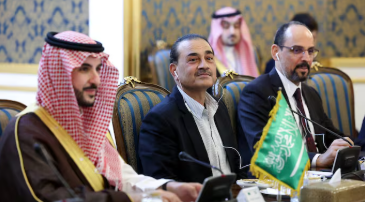
Tehran, October 27, 2026: Iran has described high-level talks with officials from Saudi Arabia, Turkey and Pakistan as productive, after the four countries held rare discussions in Tehran aimed at preventing further escalation across the Middle East.
The talks brought together Iran and three members of the Mecca Joint Defence Agreement at a time of renewed Houthi attacks on Saudi Arabia, heightened tensions between Tehran and Washington, and continuing disruption to shipping through the Strait of Hormuz.
High-Level Meeting Held in Tehran
Senior officials from Saudi Arabia, Turkey and Pakistan travelled to Tehran on October 26 for talks with Iranian leaders.
The meeting represented the first major high-level contact between Iran and the three countries since the latest escalation in regional fighting.
Iran Describes Discussions as Positive
Iranian officials characterised the discussions as constructive and positive, with both sides expressing interest in preventing a wider regional conflict.
The four countries ultimately agreed that diplomatic engagement should continue.
Saudi Arabia, Turkey and Pakistan Seek De-Escalation
The visiting delegations were focused on reducing tensions and preventing further military escalation.
Saudi Arabia said the discussions were aimed at finding ways to de-escalate the situation, strengthen regional security and promote stability.
Houthi Attacks on Saudi Arabia Central to Talks
One of the most urgent issues was the recent escalation in attacks by Yemen’s Iran-aligned Houthi movement against Saudi Arabia.
The Houthis have launched missiles and drones toward Saudi cities, airports and oil infrastructure, while the Saudi-led coalition has responded with strikes on Houthi positions in Yemen.
Riyadh Wants Pressure on Houthis
Saudi Arabia and its partners are seeking stronger Iranian involvement in restraining the Houthi movement.
Tehran has long maintained political ties with the Houthis, though the degree of direct Iranian control over their operations remains disputed.
Regional Non-Aggression Framework Discussed
The talks reportedly included discussion of a broader regional non-aggression framework.
Such an arrangement could potentially establish political commitments aimed at limiting attacks between major regional powers and reducing the risk of accidental escalation.
US-Iran Negotiations Also Discussed
Another major topic was the possibility of restarting negotiations between the United States and Iran.
Pakistan reportedly presented ideas that could help bridge differences between Washington and Tehran, with regional states potentially acting as guarantors of any future arrangement.
Pakistan Seen as Potential Mediator
Pakistan has maintained working relationships with both Iran and Saudi Arabia and has increasingly positioned itself as a possible mediator.
Its participation in the Tehran talks reflects a broader effort to avoid being drawn into a prolonged regional conflict.
Turkey Also Pushes Diplomatic Track
Turkey has likewise attempted to balance its security ties with Saudi Arabia and Pakistan with its relationship with Iran.
Ankara has supported dialogue while also strengthening defence cooperation with its Mecca pact partners.
Mecca Defence Pact Adds Strategic Importance
Saudi Arabia, Turkey and Pakistan signed the Mecca Joint Defence Agreement in August 2026.
The pact states that an armed attack on one member will be treated as an attack on all three, although its practical military mechanisms remain less detailed than NATO’s collective-defence structure.
Iran Initially Viewed Pact With Concern
Iran had earlier expressed reservations about the new security arrangement.
The Tehran meeting therefore marks an important diplomatic shift from public concern toward direct engagement with the three pact members.
Strait of Hormuz Another Key Issue
The security of the Strait of Hormuz was also part of the discussions.
The waterway is one of the world’s most important energy routes, and recent fighting has disrupted tanker traffic and pushed up global oil prices.
Shipping Through Strait Remains Disrupted
Shipping flows through the Strait of Hormuz have fallen significantly below normal levels amid ongoing tensions.
Reuters reported that traffic through the strait was running at roughly 60% of normal levels, contributing to continued uncertainty in global energy markets.
Oil Prices Rise on Mixed Signals
Oil prices moved slightly higher on October 27.
Brent crude traded around $116 a barrel, as hopes for diplomatic progress were balanced by fears of renewed Houthi attacks and wider regional escalation.
Iran Sets Conditions for Nuclear Discussions
Iran has maintained that any renewed nuclear negotiations with Washington must be accompanied by changes to US sanctions and restrictions.
Tehran wants the US to lift its blockade of Iranian ports and restrictions on Iranian oil exports before substantive nuclear negotiations resume.
Washington Wants Reduced Enrichment
The United States, meanwhile, has continued to demand limits on Iran’s uranium-enrichment activities.
That gap remains one of the biggest obstacles to a broader diplomatic settlement.
No Formal Agreement Announced
Despite the positive tone, the Tehran meeting did not produce a formal peace deal, ceasefire or security agreement.
The main concrete outcome was an agreement to continue talks.
That means the diplomatic process remains preliminary and could still face major obstacles.
Renewed Houthi Attacks Complicate Diplomacy
Diplomatic efforts are unfolding while Houthi attacks continue.
The group has claimed new strikes on Saudi oil infrastructure and Riyadh airport, highlighting the gap between political talks and developments on the battlefield.
Saudi Arabia Remains Under Security Pressure
Saudi Arabia has faced repeated missile and drone threats in recent weeks.
The attacks have increased pressure on Riyadh to strengthen its defensive partnerships while simultaneously pursuing a diplomatic route with Iran.
Turkey and Pakistan Trying to Avoid Wider War
Both Turkey and Pakistan have strong reasons to prevent the regional conflict from expanding.
Pakistan shares a long border with Iran, while Turkey maintains major economic and strategic interests across the Middle East.
A prolonged confrontation could place both countries in a difficult position between their defence commitments and their relations with Tehran.
Diplomacy Lifts Regional Markets
The prospect of improved relations helped support Gulf financial markets.
Saudi and Qatari stock exchanges recorded strong gains as investors responded positively to reports that Tehran and the Mecca pact countries were holding talks.
Energy Markets Remain Vulnerable
Despite the diplomatic optimism, energy markets remain highly sensitive to developments in the region.
Any renewed disruption in the Strait of Hormuz or attacks on Saudi oil infrastructure could quickly push crude prices higher.
Four Countries Agree to Continue Talks
The clearest outcome of the meeting was a commitment by Iran, Saudi Arabia, Turkey and Pakistan to continue consultations on peace and regional security.
Further meetings are expected, although no timetable for the next round has yet been publicly confirmed.
Tehran Talks Offer Limited Diplomatic Opening
The meeting represents a potentially important diplomatic opening at a time of severe regional instability.
Saudi Arabia and Iran remain divided on several security issues, while the Houthis continue military operations and Washington and Tehran remain far apart on sanctions and nuclear policy.
Still, direct engagement between Iran and three major regional powers offers a channel that could help reduce the risk of further escalation if the talks continue.
No Breakthrough Yet, but Dialogue Continues
For now, the significance of the Tehran talks lies less in any immediate agreement and more in the fact that the four countries have chosen to keep talking.
Whether those discussions can produce a ceasefire, reduce Houthi attacks, restore shipping security or revive US-Iran negotiations will depend on the next rounds of diplomacy.
Source: Reuters, Al Jazeera, Saudi and Iranian official statements
Supreme News Network
Соблюдаем конфиденциальность, бережно общаемся с пациентом и его близкими на каждом этапе.
Получить больше информации – наркологический вывод из запоя Красноярск
Помощь оказывают врачи с практикой в наркологии, психиатрии и восстановительной терапии.
Ознакомиться с деталями – вывод из запоя на дому в Красноярске
Если вы хотите вывести свой сайт в топ, то важно правильно подойти к выбору компании, которая займётся его продвижением. Сео агентство предлагают разные подходы — от классического SEO до продвижения по трафику. Я долго изучал эту тему и в итоге остановился на продвижение сайта в яндексе сколько стоит https://prodvizhenie-sajtov-v-moskve4.ru, так как они действительно помогают добиться результатов. Net SEO — это ещё один вариант, который стоит рассмотреть, особенно если вам важна комплексная оптимизация и продвижение сайтов Москва. Не забывайте, что раскрутка сайта Москва требует не только времени, но и грамотной стратегии, которую могут предложить только профессионалы. Если вы ищете качественное seo агентство, то обязательно уточните их опыт и отзывы клиентов — это поможет избежать ошибок. Оптимизация и продвижение сайтов Москва — это процесс, который требует внимания к деталям, поэтому не стоит экономить на специалистах. Лично я убедился, что правильный выбор агентства — это половина успеха, и теперь мой сайт стабильно занимает топовые позиции.
При потере сознания, выраженном нарушении дыхания, судорогах и других угрожающих жизни проявлениях требуется экстренная помощь. В подобной ситуации ждать обычный вызов нарколога на дому опасно, даже если клиника находится рядом.
Дополнительная информация – вывод из запоя Красноярск