Kolkata, October 27, 2026: The internal battle within the Trinamool Congress has intensified further after the rebel Democratic Trinamool Congress camp alleged that a vehicle carrying affidavits and documents for submission to the Election Commission was intercepted while travelling to New Delhi.
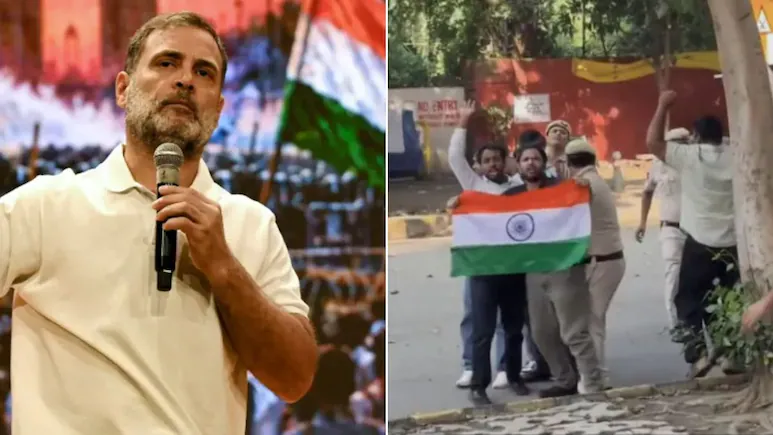
Ritabrata Banerjee alleged that supporters associated with the rival Mamata Banerjee-led faction attempted to seize the truck and the documents being transported in connection with the ongoing dispute over the original Trinamool Congress name and election symbol.
The Mamata camp has strongly denied the allegation and accused the rival faction of making politically motivated claims as the Election Commission examines competing evidence submitted by both sides.
Affidavits at Centre of Latest Dispute
The latest confrontation revolves around affidavits being submitted to the Election Commission as evidence of organisational support.
Both rival factions are attempting to demonstrate that they command the support of party representatives, office-bearers and workers and should therefore be recognised as the legitimate Trinamool Congress.
The affidavits could become an important part of the Election Commission’s assessment before it decides which faction has the stronger organisational claim.
Ritabrata Camp Alleges Truck Was Intercepted
Ritabrata Banerjee alleged that workers from his faction were transporting large quantities of affidavits by road to New Delhi when their vehicle was intercepted.
According to his account, there was an attempt to take control of the truck and seize the documents.
He said party workers resisted the alleged attempt and continued their efforts to ensure the material reached the Election Commission.
Mamata Camp Rejects Allegation
The Mamata Banerjee-led faction rejected the accusation.
Baiswanor Chatterjee, speaking for the Mamata camp, criticised Ritabrata and accused the rival faction of attempting to create a political controversy around the document-submission process.
The rival camp has also levelled its own allegations against Ritabrata, illustrating how sharply the internal dispute has deteriorated.
Ritabrata Says Rival Camp Flew Documents to Delhi
Ritabrata also alleged that the Mamata faction transported its own affidavits to Delhi by air on October 25.
His camp has sought to contrast that with its decision to transport a much larger volume of documents by road.
Neither the volume nor validity of affidavits submitted by either side by itself determines the final outcome, which remains for the Election Commission to decide.
Fight Is Over Original TMC Name and Symbol
At the heart of the dispute is control over the All India Trinamool Congress name and its original Flowers & Grass election symbol.
The party split into rival camps after the West Bengal political upheaval earlier this year, with both groups claiming to represent the legitimate organisational structure of the party.
The Election Commission is examining those competing claims under the Election Symbols (Reservation and Allotment) Order.
Election Commission Froze Original Name and Symbol
In September, the Election Commission issued an interim order freezing the original Trinamool Congress name and election symbol.
The Commission concluded that two rival groups were claiming to be the legitimate party and that a detailed determination was therefore necessary.
Until that process is completed, neither group can exclusively use the original TMC identity.
Separate Interim Names and Symbols Assigned
The rival camps have consequently been operating under temporary identities.
The Mamata Banerjee-led group has been functioning separately from the rebel Democratic Trinamool Congress camp while the Election Commission completes its proceedings.
The interim arrangement is not a final determination of which faction is the legitimate successor to the original party.
Affidavits Could Run Into Large Numbers
Factional symbol disputes can involve huge volumes of documentary evidence.
Party members, elected representatives, organisational office-bearers and local cadres may submit affidavits supporting one side or the other.
The Election Commission must then examine whether those submissions are valid and whether they accurately represent organisational and legislative support.
Supreme Court Has Also Stepped In
The dispute has also reached the Supreme Court.
Last month, the court asked the Election Commission to resolve the fight over the Trinamool name and symbol within a fixed timeframe rather than allowing the dispute to continue indefinitely.
The court noted the potential consequences of prolonged uncertainty in political-party symbol disputes.
Additional Time Granted for Documents
In a fresh judicial development, the Supreme Court has given the rival camps additional time to complete their documentary submissions.
The rebel faction was given an initial period to submit counter-affidavits and supporting documents, followed by time for the Mamata camp to file its response.
Both sides will also have an opportunity to challenge the admissibility of documents submitted by the other faction.
Election Commission Faces Complex Verification Exercise
The Commission now faces the task of examining potentially thousands or even lakhs of affidavits.
It must determine whether signatories are genuine members, whether the documents are valid and whether the numerical support claimed by each camp reflects the actual organisational balance.
Such verification can be time-consuming, particularly when both sides dispute each other’s evidence.
Supreme Court Had Suggested Technology Use
During earlier hearings, the Supreme Court even suggested that the Election Commission consider using artificial intelligence or machine-learning tools to help process the huge volume of documents.
The Election Commission acknowledged that technology could assist to some extent but said verification would still require substantial scrutiny.
Rival Camps Previously Faced EC Together
The Election Commission had earlier heard representatives of both factions in September.
The Mamata camp argued that there was no legitimate organisational split and described the rebels as defectors.
The rival faction, however, maintained that it had sufficient legislative and organisational support to claim the party’s identity.
Mamata Camp Cites Organisational Elections
During earlier proceedings, the Mamata faction argued that internal elections had regularly been conducted to elect the party chairperson and national working committee.
It maintained that Mamata Banerjee continued to head the properly constituted organisation and that the rebel legislators could not simply claim control of the parent party.
Rebel Camp Challenges Mamata’s Control
The Democratic Trinamool Congress, however, has argued that political parties cannot function as personal organisations.
The rebel side welcomed the Election Commission’s earlier decision to freeze the name and symbol, portraying the dispute as a contest between collective organisational authority and centralised leadership.
Bypolls Already Saw Temporary Symbols
The dispute affected recent West Bengal Assembly by-elections as both factions had to contest under temporary names and symbols.
The Election Commission’s interim arrangement ensured that neither side could gain an advantage by using the original TMC identity until the underlying dispute was resolved.
Political Stakes Remain High
The final decision will have major political consequences.
Control of an established party name and symbol can influence voter recognition, organisational infrastructure, fundraising, membership and the political legitimacy of rival leadership groups.
For both factions, therefore, the Election Commission proceedings extend far beyond a technical symbol dispute.
Rival Allegations Raise Temperature
The latest allegations over the transportation of affidavits show that the conflict has moved into an increasingly confrontational phase.
Ritabrata’s camp alleges interference with its evidence, while the Mamata faction rejects that version and accuses its rivals of political misconduct.
No independent finding establishing responsibility for the alleged truck incident has yet been reported.
EC Decision Will Ultimately Determine Identity
Despite the increasingly heated public accusations, the final question of who can claim the original All India Trinamool Congress identity will be decided by the Election Commission on the basis of the evidence before it.
The Commission will examine organisational support, legislative backing, party records, affidavits and other documents submitted by both factions.
Feud Likely to Intensify Before Final Order
With both groups continuing to submit evidence and challenge each other’s claims, the dispute is likely to remain one of the most significant political battles in West Bengal.
The alleged attempt to intercept affidavits has added another layer of confrontation, but the central contest remains unchanged: both camps want recognition as the legitimate Trinamool Congress and control over its original name and election symbol.
Source: The Indian Express, Election Commission of India, Supreme Court proceedings
Supreme News Network