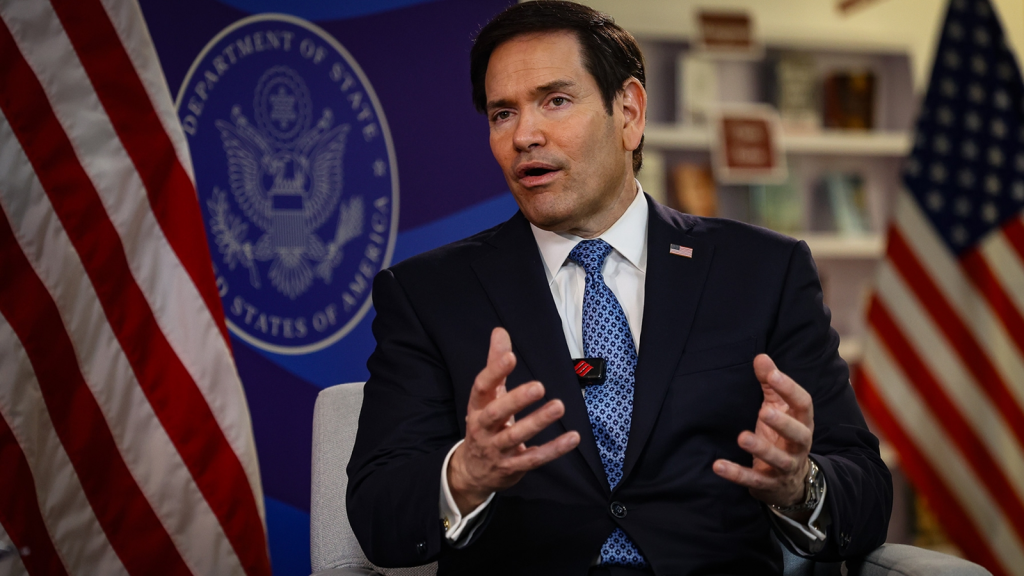
New Delhi, October 21, 2026: US Secretary of State Marco Rubio has said that Washington’s recent immigration restrictions are not specifically aimed at India, describing the tougher approach as part of the Trump administration’s broader efforts to control migration into the United States.
The remarks come amid close scrutiny of US visa policies in India, where thousands of students, technology professionals and skilled workers seek opportunities in the American job market. Immigration, trade, energy and strategic cooperation remain important issues in India-US relations.
Rubio Says India Is Not Being Singled Out
Rubio said the United States’ stricter immigration approach should not be interpreted as a policy directed specifically against India or Indian nationals.
The Trump administration has defended its immigration measures as part of a broader effort to manage migration levels and address concerns related to employment, housing and public services.
His remarks appear aimed at clarifying that the policy shift is intended to apply more broadly rather than single out one country.
US Defends Tougher Visa and Immigration Rules
The Trump administration has introduced or proposed tighter measures across several immigration categories.
Rubio has framed the broader approach around controlling migration while distinguishing between legal, skills-based immigration and what the administration considers excessive levels of migration.
However, the practical effects on individual applicants will depend on the specific rules, eligibility requirements and enforcement measures adopted by US authorities.
India Closely Watches Changes to US Visa Policy
Changes in American immigration policy are particularly significant for India because of the large number of Indian students, technology professionals and skilled workers who travel to the United States.
Indian nationals are major participants in employment-based immigration programmes, including the H-1B visa system, which allows eligible US employers to hire foreign professionals for specialised occupations.
Any changes to application procedures, eligibility criteria or visa processing could affect Indian applicants and the companies that employ them.
Skilled Foreign Workers Remain Important
Foreign professionals contribute to several major sectors of the US economy, including technology, engineering, research and healthcare.
Rubio’s remarks come amid an ongoing debate in the United States over how to balance the demand for skilled international workers with domestic employment priorities.
The administration has emphasised national interests and labour-market considerations in shaping immigration policy. The extent to which future measures affect skilled workers will depend on the final policy framework.
Indian Students Also Concerned About Visa Changes
The United States remains a major destination for Indian students pursuing higher education and research opportunities.
Changes involving visa screening, student status, post-study employment and immigration enforcement can influence students’ decisions about studying in the country.
Although Rubio’s remarks suggest that India is not the specific target of the broader restrictions, Indian students and professionals could still face changes resulting from policies that apply across nationalities.
Immigration Discussed During India Visit
Rubio’s comments came during his visit to India, where he also held discussions with External Affairs Minister S. Jaishankar.
The broader bilateral agenda includes trade negotiations, energy security, defence cooperation, critical technologies and people-to-people ties.
Immigration policy remains an important issue because mobility between the two countries supports business, education, research and professional collaboration.
India-US Relations Extend Beyond Immigration
Despite differences over immigration and trade, India and the United States continue to maintain a broad strategic partnership.
Cooperation spans defence, technology, education, energy, investment and regional security. Millions of people also maintain family, academic and professional connections between the two countries.
Both governments have an interest in sustaining these links while addressing their respective domestic policy priorities.
Indian Applicants Could Still Be Affected
Even if US immigration restrictions are not specifically directed at India, Indian applicants may be affected by stricter screening, revised eligibility requirements or changes to work and student visa programmes.
The actual impact will depend on the final rules issued by the US government, the visa categories involved and how the measures are implemented.
Applicants should therefore rely on official US government guidance for the latest requirements rather than interpreting Rubio’s remarks as a guarantee that existing visa procedures will remain unchanged.
Rubio Seeks to Clarify Washington’s Position
Rubio’s statement seeks to distinguish the Trump administration’s broader immigration policy from a country-specific action against India.
For New Delhi, the key question will be how the restrictions are implemented and whether they affect Indian students, skilled professionals and businesses operating across the two countries.
Source: Hindustan Times, PTI, US State Department
Supreme News Network

When I originally commented I clicked the “Notify me when new comments are added” checkbox and now
each time a comment is added I get four emails with the same comment.
Is there any way you can remove me from that service? Bless you!
xnxx