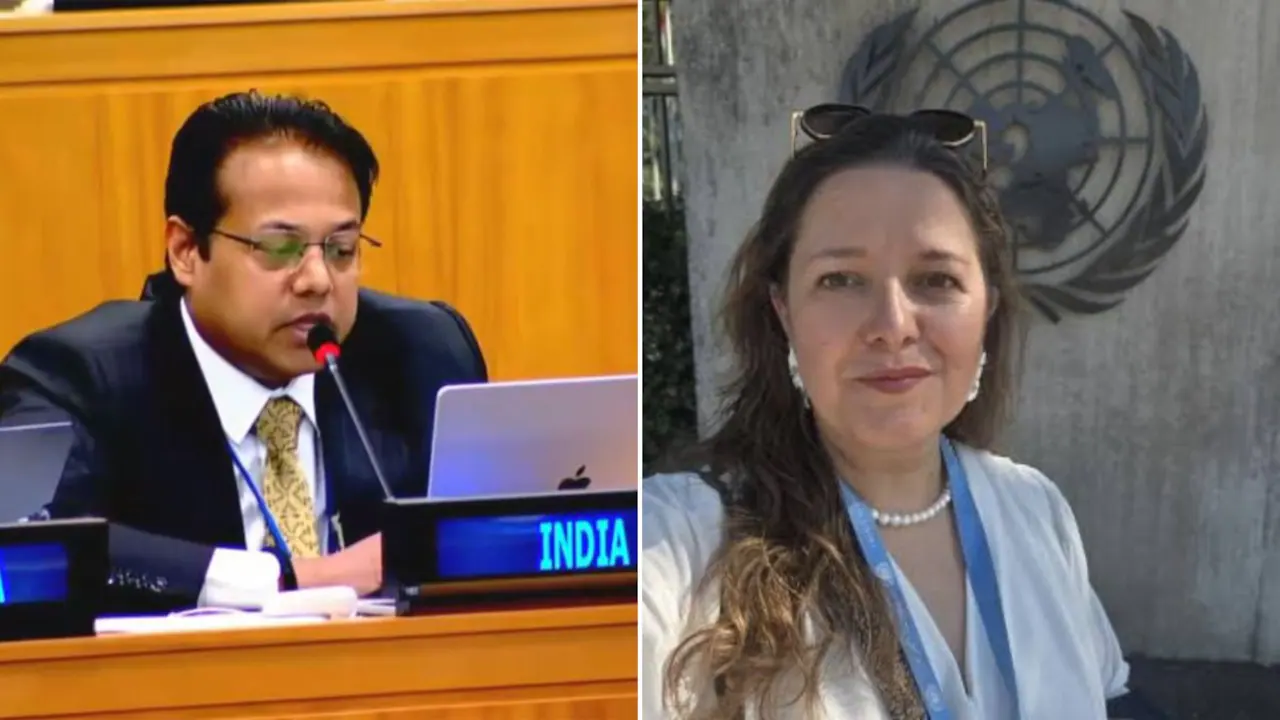
United Nations, October 17, 2026: India has rejected criticism by UN Special Rapporteur Gina Romero over the handling of youth-led protests and the treatment of young people in the country, questioning the evidence cited in her report. Addressing the 81st session of the UN General Assembly’s Third Committee, Indian diplomat Anuj Swarup described the allegations as “hearsay” and defended India’s constitutional protections for freedom of expression, peaceful assembly and association.
India Questions Evidence Cited in UN Report
Romero’s report highlighted concerns that young people in India had faced retaliation or stigmatisation for speaking about issues including mental health and gender justice.
India challenged the evidentiary basis of these claims, arguing that the report relied on anonymous submissions that were not supported by publicly verifiable evidence.
‘Hearsay Dressed Up as a UN Report’
Swarup delivered a strong response to the findings, questioning whether broad conclusions about young people in India could be drawn from anonymous allegations.
He described the claims as “hearsay, dressed up as a UN report” and said India rejected them. His remarks reflected New Delhi’s objection to the report’s methodology and its assessment of the country’s civic environment.
India Defends Constitutional Freedoms
The Indian representative cited Article 19 of the Constitution, which protects freedom of speech and expression, peaceful assembly and association, subject to constitutionally permitted restrictions.
He also pointed to institutions such as the judiciary, the media and the National Human Rights Commission as safeguards for citizens’ rights.
India maintained that its democratic framework provides avenues for citizens to express grievances, challenge decisions and participate in public life.
‘Verify Before You Vilify’
India urged the Special Rapporteur to scrutinise submissions more carefully before drawing conclusions about conditions in the country.
Swarup called for greater rigour and fairness in reports prepared by UN mandate holders, arguing that allegations should be assessed carefully rather than generalised from anonymous accounts.
The exchange highlights a broader disagreement over the standards of evidence and verification used in international human-rights assessments.
Youth-Led Protests Provide Wider Context
The diplomatic dispute comes amid demonstrations by young people in India over issues including electoral-roll revisions, examination irregularities, employment and governance.
Recent protests associated with the satirical youth political movement known as the Cockroach Janta Party (CJP) have also attracted national and international attention.
The demonstrations have brought renewed scrutiny to how authorities respond to youth activism and political dissent.
India Highlights Youth Political Participation
Swarup argued that active youth participation in public debate and protest was relevant to assessing claims that civic space had been systematically restricted.
He referred to the emergence of youth-led political activity, including movements that have organised demonstrations, challenged government policies and engaged with political leaders.
India’s position is that such participation should form part of a broader assessment of the country’s democratic and civic environment.
UN Rapporteur Raises Concerns Over Protest Rights
Romero, the UN Special Rapporteur on the rights to freedom of peaceful assembly and association, has raised concerns about the treatment of young people involved in peaceful demonstrations in India.
Her intervention came amid allegations of excessive force and arbitrary detention during protests. Indian authorities have disputed aspects of the criticism, leaving the competing assessments at the centre of the diplomatic exchange.
Delhi Protests Draw Additional Scrutiny
Recent youth-led demonstrations in Delhi over electoral-roll revisions and demands concerning Chief Election Commissioner Gyanesh Kumar have intensified the debate over protest rights and policing.
Human-rights organisations and international observers have questioned some police tactics, while authorities have argued that restrictions were necessary to maintain public order.
The handling of these demonstrations has become part of the wider discussion about the balance between the right to protest and public-order requirements.
Arrest of CJP Founder Adds to Controversy
The debate has intensified following reports that CJP founder Abhijeet Dipke was arrested in Delhi ahead of a protest rally.
Police reportedly said the action was intended to prevent a breach of peace. Supporters of the movement, however, have characterised the arrest as part of a broader pattern of restrictions on dissent.
The competing claims have added to scrutiny of the authorities’ response to youth-led political activity.
Electoral-Roll Revisions Remain a Point of Contention
The protests have also focused on revisions to electoral rolls. Opposition groups and demonstrators have raised concerns that large-scale deletions could affect eligible voters.
The Election Commission has denied allegations of political manipulation and maintained that affected citizens can pursue correction or re-registration through the prescribed procedures.
The dispute over electoral rolls has become another flashpoint in the debate over democratic participation and institutional accountability.
India Refers to Dialogue With Young Leaders
Swarup also referred to remarks by UN High Commissioner for Human Rights Volker Türk concerning the value of dialogue with young leaders.
India argued that this approach offered a more constructive way to address youth movements and said the perspective had not been adequately reflected in Romero’s report.
Wider Disagreement Between India and UN Rights Mechanisms
The exchange reflects continuing differences between New Delhi and international human-rights mechanisms over assessments of protest rights, policing and civic freedoms.
India has repeatedly argued that external criticism can lack context or rely on insufficiently verified allegations. UN officials and rights groups, meanwhile, continue to raise questions about the handling of demonstrations and detentions.
Debate Focuses on Evidence and Accountability
At the centre of the dispute are differing assessments of the conditions facing young people and the evidence used to evaluate them.
Romero’s report raises concerns about possible retaliation and restrictions affecting youth activism, while India disputes the substantiation and broader conclusions of those claims.
The disagreement underscores the importance of transparent evidence, fair assessment and accountability in discussions about civil liberties and the right to peaceful protest.
Source – Hindustan Times, India Today, NDTV, Reuters
Supreme News Network