
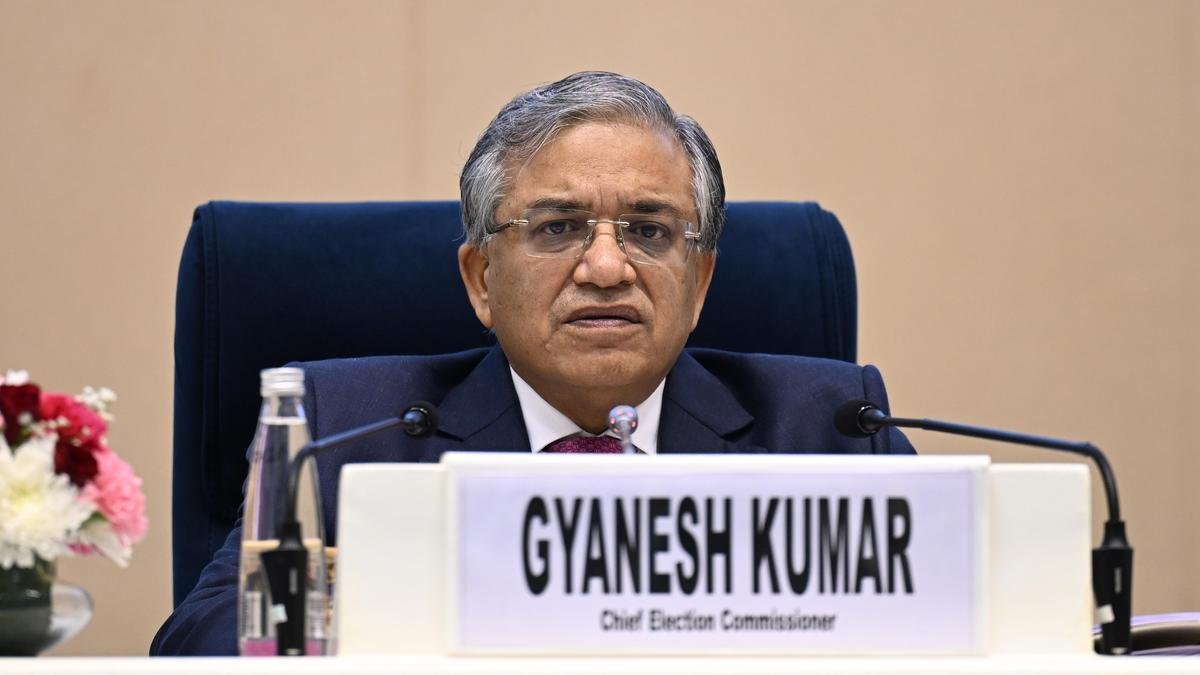
New Delhi, October 5, 2026: The Supreme Court on Monday took up petitions seeking the suspension and prosecution of Chief Election Commissioner Gyanesh Kumar, with the pleas alleging that several decisions linked to the Special Intensive Revision (SIR) of electoral rolls were taken without the concurrence of the other two Election Commissioners.
Three-Judge Bench Takes Up the Matter
A bench comprising Chief Justice of India Surya Kant, Justice Joymalya Bagchi and Justice V Mohana is hearing the petitions.
The cases have drawn attention because they question whether the Chief Election Commissioner can independently take decisions on behalf of the Election Commission of India, which functions as a multi-member constitutional body.
Pleas Challenge Alleged Unilateral Decisions
The petitions allege that around 14 decisions were taken in the name of the Election Commission despite objections reportedly recorded by Election Commissioners Sukhbir Singh Sandhu and Vivek Joshi.
The disputed decisions are said to relate to various aspects of the SIR exercise between October 2025 and August 2026.
Suspension of CEC Sought
One of the petitions, filed by Rakesh Kumar Singh, seeks the suspension of Gyanesh Kumar from functioning as Chief Election Commissioner while the matter is pending.
It has also asked the Supreme Court to examine official Election Commission records to determine whether the disputed decisions were taken in accordance with constitutional and statutory requirements.
Second Plea Seeks Probe and Reversal of Decisions
Another petition filed by advocate Shailendra Mani Tripathi seeks the quashing of the allegedly unilateral decisions.
The plea has also sought an independent judicial inquiry or Special Investigation Team headed by a retired Supreme Court judge, with assistance from cybersecurity and IT experts.
Form 6 Changes Among Issues Raised
One of the major issues raised in the petitions concerns changes to Form 6, which is used by citizens for voter registration.
The petitioners have alleged that additional requirements relating to ancestral details and previous SIR records were introduced through Election Commission software without following the statutory amendment process.
Election Commission Rejects Allegations of Internal Rift
The Election Commission has disputed suggestions that its final decisions were taken without consensus.
It has maintained that while individual Election Commissioners may express different views or suggestions during deliberations, final decisions of the Commission are taken unanimously.
SIR Becomes Major Political Flashpoint
The Special Intensive Revision exercise has also triggered political protests, with opposition leaders questioning voter deletions and demanding greater transparency in the electoral roll revision process.
The issue has now moved from a political controversy to a significant constitutional and legal battle before the Supreme Court.
Source – LiveLaw, Hindustan Times, The Indian Express
Supreme News Network