

NEW DELHI | August 21, 2026
Congress Expands Outreach to Young Voters
Congress leader and Leader of Opposition in the Lok Sabha Rahul Gandhi is stepping up direct engagement with young Indians, particularly Gen-Z voters and women students, as the party experiments with a more youth-focused political outreach strategy.
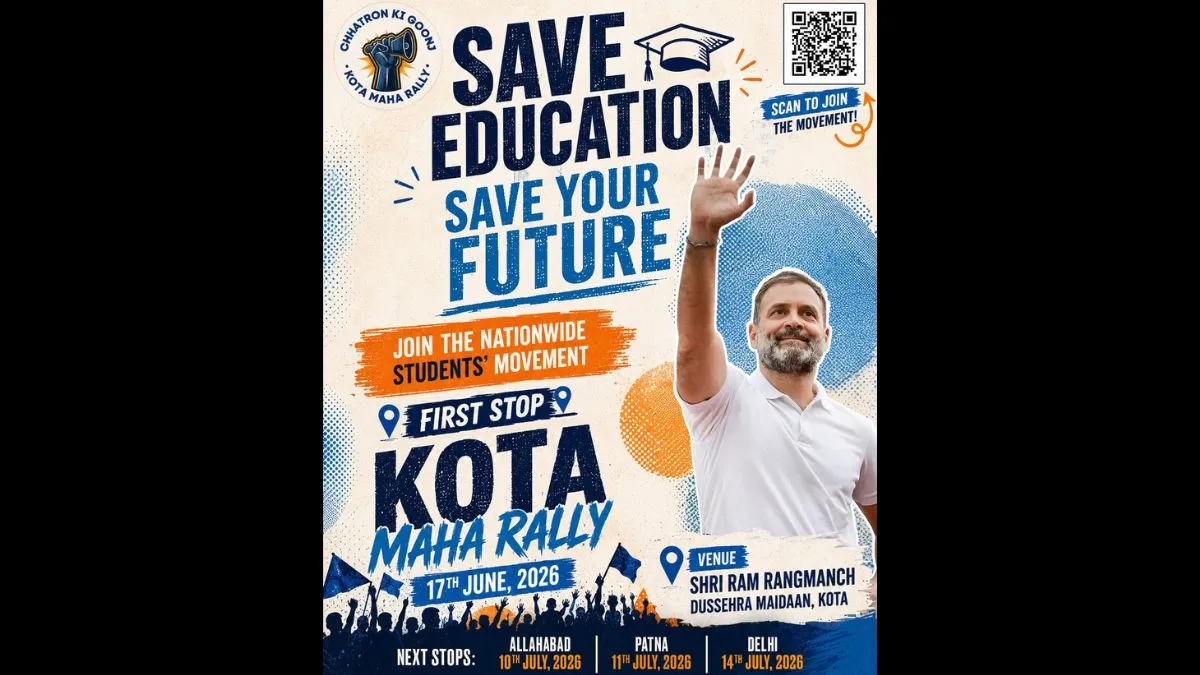
The initiative is being driven in part through the “Chhatron Ki Goonj” (Voice of Students) campaign, which focuses on concerns such as competitive-exam pressure, paper leaks, examination irregularities, rising education costs and unemployment. The campaign has already travelled through student hubs including Kota, Dehradun and Prayagraj and is now moving to Pune.
Pune Event to Focus Exclusively on Women Students
A major feature of the latest outreach is the upcoming August 22 Pune programme, which is being organised specifically for women students.
The programme will focus on issues including paper leaks, examination irregularities, education fees and unemployment, according to reports. Pune Police has granted permission for the event with conditions covering security, crowd management and law and order.
The decision to focus specifically on women students represents a shift in the campaign’s format and puts Gen-Z women at the centre of Congress’s latest engagement effort.
Moving Beyond Traditional Political Rallies
The campaign reflects a broader attempt to move away from conventional political rallies and engage young voters through more direct conversations and digital platforms.
In Pune, Congress organisers even used an open-air music event on FC Road to attract young people ahead of Rahul Gandhi’s programme. The approach is designed to connect with Gen-Z audiences in settings that are different from traditional political gatherings.
The strategy places greater emphasis on listening to young people’s concerns rather than relying exclusively on speeches and large public rallies.
Women’s Voices Become a Major Focus
Rahul Gandhi has also sought direct input from women through social media, asking them to share their experiences, aspirations and challenges as Indian women.
Responses have included discussions about social expectations, personal freedom and the ways in which women experience control in everyday life. The initiative is being incorporated into the broader outreach aimed at understanding women’s concerns.
This indicates that the Congress strategy is attempting to combine youth outreach with a more targeted engagement with women voters.
Congress Looks to Build a New Youth Connect
The party’s student campaign began with a focus on education-related grievances and has gradually expanded into a wider political engagement exercise.
The central issues include the pressure faced by students preparing for competitive examinations, concerns over paper leaks and delays, unemployment and the increasing cost of education.
For Congress, building a stronger connection with younger voters could become increasingly important as it attempts to strengthen its organisational and electoral position.
Digital Communication Gains Importance
Rahul Gandhi’s outreach also reflects the growing importance of social media in political communication.
The Congress leader has used platforms such as Instagram to communicate directly with Gen-Z audiences, including through question-and-answer initiatives. More recently, Gandhi has also asked the party to monitor the social-media activity of its functionaries to ensure that the organisation’s messaging on social justice issues is effectively amplified.
The emphasis suggests that Congress wants to build a more coordinated digital presence alongside its physical outreach programmes.
Strategy Comes Ahead of Major Electoral Challenges
The youth-focused campaign comes as Congress looks to rebuild its political organisation and expand its appeal among younger voters.
The party’s wider strategy includes strengthening its organisational network and improving its connection with younger sections of the electorate, particularly in states where it faces strong political competition.
The effectiveness of the strategy will ultimately depend on whether these interactions translate into sustained political engagement and organisational support.
A Shift in Congress’s Political Outreach
Rahul Gandhi’s latest initiatives indicate a deliberate effort to make students, Gen-Z and women more central to Congress’s political messaging.
From student-focused discussions to women-only events and social-media conversations, the party is experimenting with formats designed to reach younger audiences on issues that directly affect their education, employment and everyday lives.
Whether this approach develops into a larger electoral strategy will become clearer as Congress expands the campaign to more cities and communities.
Source: NDTV, Times of India, The Tribune, The Federal, Economic Times.
Original Report: Supreme News Network (SSN)