

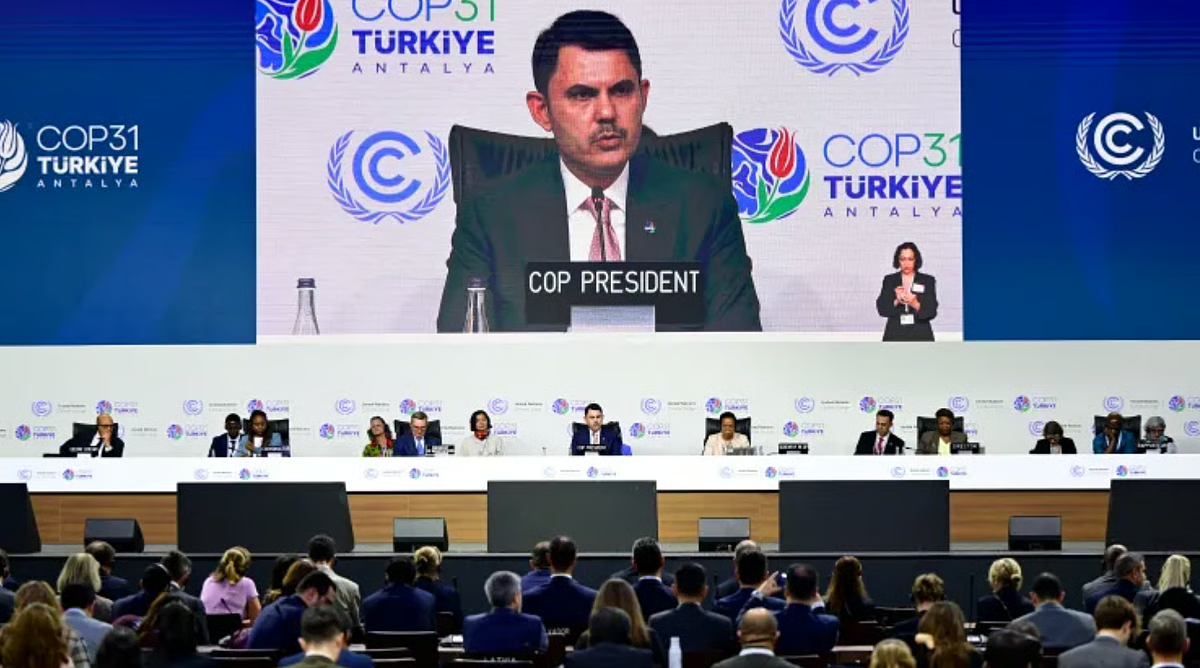
Antalya, Turkey, November 22, 2026: The United Nations COP31 climate summit has entered its second day of overtime as negotiators from nearly 200 countries struggle to reach an agreement on fossil fuel reductions, financial assistance for developing nations and the future direction of global climate action.
The two-week conference, hosted in Antalya, Turkey, was originally scheduled to conclude on Friday, November 20. However, deep disagreements over the language of the proposed climate agreement have delayed its conclusion.
One of the main disputes concerns whether the final agreement should explicitly call for a transition away from coal, oil and natural gas.
A revised draft released early on Sunday omitted direct references to fossil fuels, drawing objections from countries seeking stronger commitments to reduce greenhouse gas emissions.
Climate finance, adaptation funding and the treatment of scientific assessments have also emerged as major obstacles to reaching a consensus.
COP31 Climate Summit Enters Second Day of Overtime
The 31st United Nations Climate Change Conference, known as COP31, has continued beyond its scheduled closing date as participating countries remain divided over several important issues.
Negotiators from nearly 200 countries have spent two weeks discussing measures to address global warming, reduce emissions and support countries vulnerable to climate change.
Despite extensive discussions, delegates have struggled to agree on the wording of the final summit declaration.
The negotiations continued through Saturday and into Sunday as officials attempted to bridge differences between developed economies, developing countries and major fossil fuel producers.
Turkey’s COP31 President Murat Kurum has urged participating nations to reach a compromise.
However, disagreements over energy policy and climate finance have prevented the conference from reaching a comprehensive final agreement.
Fossil Fuel Phase-Out Becomes Major Sticking Point
The future of fossil fuels has emerged as one of the most contentious issues at COP31.
A coalition of approximately 130 countries has pushed for the final agreement to include an explicit commitment to transitioning away from fossil fuels.
These countries argue that clear language is necessary to strengthen global efforts to reduce emissions and limit temperature increases.
However, some fossil fuel-producing nations have opposed proposals that could establish stronger international commitments to reduce reliance on coal, oil and natural gas.
The disagreement has made it difficult for negotiators to agree on a common position.
The issue is particularly significant because fossil fuel combustion remains the largest contributor to human-caused greenhouse gas emissions.
Revised COP31 Draft Omits Fossil Fuel References
A revised draft agreement released during the final stages of negotiations did not explicitly mention fossil fuels.
The omission became a major source of criticism among countries seeking stronger climate commitments.
Earlier proposals had included language addressing the need to accelerate the transition away from fossil fuel use.
However, subsequent drafts removed those references as negotiators attempted to accommodate competing national positions.
Several delegations argued that removing fossil fuel language would weaken the final agreement and fail to build on commitments adopted at previous climate conferences.
Others have sought a broader approach focused on energy systems, emissions reductions and technological solutions.
The disagreement remains central to the continuing negotiations.
European Union Pushes for Stronger Climate Agreement
The European Union has been among the groups calling for a meaningful agreement on fossil fuels and climate action.
European representatives have warned against adopting a final declaration that does not adequately address the causes of global warming.
The EU’s senior climate officials have indicated that an agreement must contain substantive commitments rather than simply provide language acceptable to all parties.
European countries have also raised concerns about proposals that could weaken previously agreed climate objectives.
The bloc has participated in discussions with the Turkish COP31 presidency and other major negotiating groups.
The outcome will depend on whether countries can find acceptable wording on fossil fuels, finance and implementation.
Saudi Arabia and Fossil Fuel-Producing Nations Face Pressure
Major fossil fuel-producing countries have been central to the negotiations over energy transition commitments.
Saudi Arabia has been among the countries engaged in discussions with the COP31 presidency over the proposed final agreement.
Several nations that rely heavily on oil and gas production have expressed concerns about the economic consequences of stronger international language on fossil fuel reductions.
Countries supporting a faster transition argue that delaying action could increase the risks and costs associated with climate change.
The different national economic priorities have complicated efforts to establish a common position.
COP31 President Murat Kurum has held discussions with representatives from Saudi Arabia, the European Union and Australia in an effort to resolve the dispute.
Climate Finance Creates Another Major Disagreement
Alongside fossil fuels, financial support for developing countries has become a major obstacle in the negotiations.
Developing nations have called for stronger commitments from wealthier countries to provide funding for climate adaptation and emissions reduction.
Climate finance is intended to help countries invest in renewable energy, strengthen infrastructure and respond to the effects of climate change.
Many developing economies argue that they face growing climate-related risks despite having contributed comparatively little to historical greenhouse gas emissions.
They have therefore sought clearer financial commitments and more predictable access to funding.
Disagreements remain over the scale of assistance, the responsibilities of contributing countries and the mechanisms through which financial resources should be delivered.
Developing Countries Demand Greater Adaptation Funding
Countries particularly vulnerable to climate change have placed significant emphasis on adaptation finance.
Adaptation funding supports measures such as flood protection, drought-resistant agriculture, water security and climate-resilient infrastructure.
Small island nations and several African countries have argued that existing financial arrangements are insufficient to meet their growing needs.
Negotiations have also focused on implementing previous commitments to increase adaptation finance.
However, a revised draft removed a proposed annual adaptation finance target, creating further concerns among developing countries.
Delegations have continued discussions on how to strengthen financial support without creating commitments that some countries may be unwilling to accept.
Small Island Nations Warn of Growing Climate Risks
Small island developing states have played an important role in the COP31 negotiations.
Countries such as Tuvalu are particularly vulnerable to rising sea levels, coastal erosion and extreme weather.
Representatives from these nations have called for stronger international action to reduce emissions and increase financial assistance.
They argue that delays in implementing climate commitments can have serious consequences for communities already experiencing climate-related damage.
Small island countries have also sought more accessible funding mechanisms that allow them to respond to climate risks without excessive administrative barriers.
Their demands have added urgency to discussions over both fossil fuel policy and adaptation finance.
COP31 Presidency Attempts Last-Minute Compromise
Turkey’s Environment Minister Murat Kurum, who is serving as COP31 president, has been leading efforts to resolve the deadlock.
Kurum has held consultations with key negotiating groups and encouraged delegates to consider compromise proposals.
The presidency has attempted to develop language that could secure consensus among countries with significantly different energy and economic interests.
On Sunday, negotiators were asked to consider another proposal as discussions continued.
However, any final agreement must receive broad acceptance from participating countries.
The difficulty of achieving consensus has kept the summit open beyond its planned conclusion.
Australia Plays Important Role in COP31 Negotiations
Australia has been working alongside Turkey in the COP31 process.
The two countries have played important roles in coordinating negotiations and addressing disputes over climate policy.
Australia has been involved in efforts to develop language on emissions reductions, energy transition and the implementation of international commitments.
The negotiations have also attracted attention from Pacific island nations, which have repeatedly urged Australia and other major economies to strengthen climate action.
The continued involvement of Australia and Turkey reflects the importance of diplomatic coordination in attempting to reach a final agreement.
Carbon Capture Technologies Become Controversial
Another area of disagreement concerns the role of carbon capture, utilisation and storage technologies.
These systems are designed to capture carbon dioxide emissions from industrial facilities or other sources and prevent some of the captured emissions from entering the atmosphere.
Supporters argue that carbon capture could play a role in reducing emissions from industries where alternatives are difficult to implement.
However, critics warn that excessive reliance on such technologies could delay the transition away from fossil fuels.
Some delegations have opposed including certain carbon-removal technologies in the final agreement, arguing that they could provide justification for continued fossil fuel use.
The debate reflects broader disagreements over how countries should achieve emissions reductions.
Scientific Reports and Climate Targets Add to Disputes
Negotiators have also disagreed over the timing and treatment of major scientific assessments.
Scientific reports play an important role in guiding climate policy and evaluating progress towards international temperature goals.
Countries have discussed how future scientific findings should inform the implementation of climate commitments.
The debate is connected to the Paris Agreement’s objective of keeping global warming well below 2°C above pre-industrial levels while pursuing efforts to limit warming to 1.5°C.
Some countries have called for stronger recognition of scientific evidence demonstrating the need for rapid emissions reductions.
Others have sought wording that provides greater flexibility in national implementation.
These differences have added another challenge to the final negotiations.
COP28 Fossil Fuel Commitment Remains Important
The current disagreement follows a major decision adopted at COP28 in Dubai in 2023.
At that summit, participating countries agreed to contribute to a global transition away from fossil fuels in energy systems.
The agreement was widely regarded as a significant development because it directly addressed fossil fuels in the international climate negotiation process.
However, subsequent conferences have struggled to establish detailed implementation measures.
At COP31, countries advocating stronger commitments have called for the final agreement to build on the language adopted in Dubai.
The omission of fossil fuel references from recent draft documents has therefore become especially contentious.
Why COP31 Climate Talks Matter for Developing Economies
The outcome of COP31 could influence how developing countries plan their energy transitions and prepare for climate-related risks.
Many emerging economies must balance economic development, energy security and emissions reduction.
Access to affordable financing and clean technologies can play an important role in achieving these objectives.
Countries with limited financial resources often face additional challenges when investing in renewable energy, modern electricity networks and climate-resilient infrastructure.
A stronger international agreement could provide greater clarity regarding cooperation and financial commitments.
Conversely, continued disagreements could delay decisions on implementing climate-related programmes.
What Happens if COP31 Ends Without a Strong Agreement?
The possibility of an inconclusive outcome has become a concern as negotiations continue beyond the scheduled closing date.
A final declaration that omits key commitments could disappoint countries seeking stronger action on emissions and climate finance.
If countries fail to reach consensus, some decisions may need to be reconsidered through future diplomatic discussions.
However, the absence of agreement on particular issues would not automatically cancel existing international climate commitments.
Countries would remain responsible for implementing their obligations under established agreements and national climate policies.
The immediate challenge for COP31 negotiators is finding language that can secure agreement while maintaining meaningful progress on climate action.
What Happens Next at COP31?
The COP31 presidency is continuing consultations with major negotiating groups in an attempt to secure a final outcome.
Delegates are examining compromise proposals involving fossil fuels, adaptation finance and other unresolved issues.
The European Union, developing countries, fossil fuel producers and vulnerable island nations remain important participants in the discussions.
The final result will depend on whether these groups can agree on acceptable language and practical commitments.
As of the morning of November 22, 2026, negotiations were continuing, and no comprehensive final agreement had been confirmed.
The outcome of the extended talks will determine whether COP31 produces a substantive new agreement or leaves major questions for future negotiations.
COP31 Climate Summit Deadlock: Key Highlights
The COP31 climate summit in Antalya, Turkey, has continued beyond its scheduled November 20 closing date because of disagreements among nearly 200 countries.
The main disputes involve fossil fuel transition commitments, climate finance, adaptation funding and the treatment of scientific assessments.
A revised draft agreement released early Sunday omitted direct references to fossil fuels, prompting objections from countries demanding stronger climate action.
Approximately 130 countries have supported including language addressing the transition away from fossil fuels.
Developing nations have also called for clearer financial commitments to help them respond to climate change.
COP31 President Murat Kurum is leading last-minute negotiations to resolve the differences.
The conference’s final outcome remains uncertain as governments continue efforts to reach a consensus.
Source – Reuters (November 20–21, 2026), Associated Press (November 22, 2026), AFP, Al Jazeera, Business Standard, United Nations Framework Convention on Climate Change (UNFCCC)
Supreme News Network


