
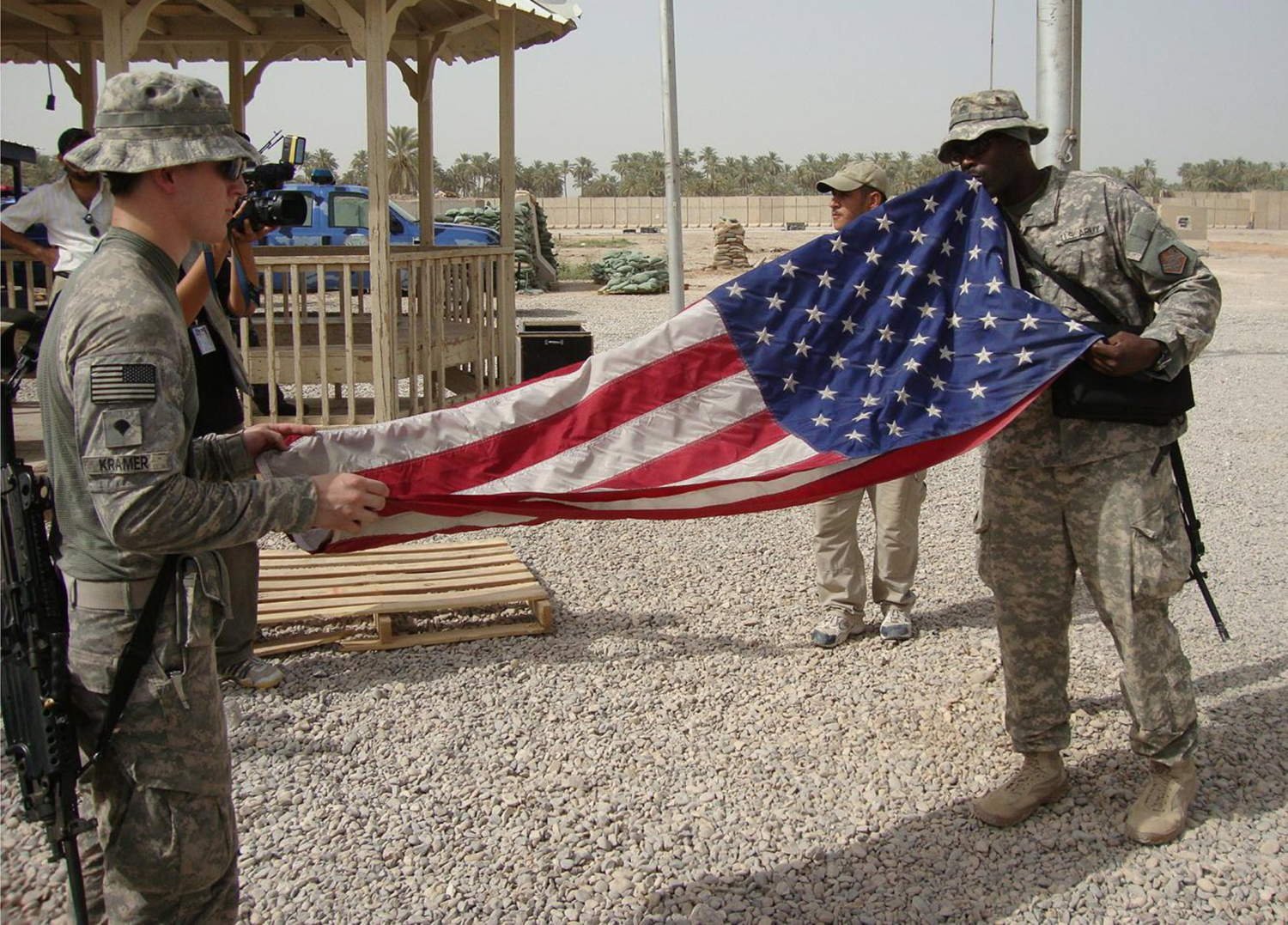
BAGHDAD, September 30: The United States and its coalition partners have completed the withdrawal of forces and equipment from their remaining bases in Iraq, marking the formal conclusion of the US-led Operation Inherent Resolve mission in the country.
The development represents a major shift in the security relationship between Washington and Baghdad after more than two decades of US military involvement in Iraq, beginning with the 2003 invasion and followed by a renewed deployment in 2014 to combat the Islamic State group.
US-Led Coalition Mission Formally Ends
The conclusion of Operation Inherent Resolve marks the end of the coalition’s long-running military mission inside Iraq.
Coalition personnel and equipment have been withdrawn from remaining positions, including facilities in the Kurdistan Region.
The transition follows an agreement between the United States and Iraq to move from a coalition-based military mission toward a more conventional bilateral security relationship.
Operation Inherent Resolve Began in 2014
The mission was launched in 2014 after Islamic State militants captured large areas of Iraq and Syria.
At the height of its expansion, the militant group controlled major cities and large stretches of territory while declaring a self-proclaimed caliphate.
The US-led coalition provided Iraqi forces with air support, intelligence, training, surveillance and logistical assistance during the campaign against the group.
Islamic State Lost Territorial Control
Iraqi forces declared victory over Islamic State’s territorial presence in the country in 2017.
Although the organisation no longer controls large areas of Iraq, smaller militant cells and networks remain active in some regions.
Iraqi security forces will now take the primary responsibility for preventing the group from rebuilding its capabilities.
US Support Will Not End Completely
The completion of the coalition mission does not mean all military cooperation between the United States and Iraq will stop.
Washington is expected to continue providing selected training, intelligence and security assistance under bilateral arrangements.
The focus will shift away from a large coalition mission toward targeted cooperation requested by Iraqi authorities.
Final Withdrawal Focused on Erbil
The last stage of the transition included the movement of coalition personnel and equipment from Erbil Air Base in Iraq’s Kurdistan Region.
Other coalition positions had already been reduced or transferred during earlier phases of the withdrawal.
The process was carried out gradually as Iraqi security forces assumed greater operational responsibility.
US Military Presence Began With 2003 Invasion
US-led forces invaded Iraq in March 2003, overthrowing the government of Saddam Hussein.
The invasion was followed by years of insurgency, sectarian violence and political instability.
American combat forces formally withdrew from Iraq at the end of 2011, ending the first major phase of the US military presence.
American Troops Returned in 2014
US forces returned to Iraq in 2014 after Islamic State rapidly captured territory, including the northern city of Mosul.
The Iraqi government requested international assistance as its security forces struggled to stop the group’s advance.
An international coalition was subsequently created to support Iraqi forces in reclaiming territory controlled by Islamic State.
Thousands of US Personnel Died in Iraq Operations
Around 4,500 US military personnel died during operations connected with the Iraq conflict over the past two decades.
US troop levels exceeded 160,000 during the height of the earlier war before being reduced significantly over subsequent years.
The post-2014 mission involved a much smaller force focused primarily on counterterrorism and support operations.
Iraqi Forces Take Full Lead
Iraq’s military and security institutions will now take the leading role in counterterrorism operations.
Their responsibilities include tracking militant cells, securing sensitive areas and responding to threats without the same level of direct coalition presence.
Years of training and equipment support have been aimed at strengthening the ability of Iraqi forces to operate independently.
Islamic State Threat Has Not Completely Disappeared
Despite losing its territorial strongholds, Islamic State remains capable of carrying out smaller-scale attacks.
Security agencies continue to monitor sleeper cells and militant networks operating in remote areas.
Preventing the organisation from reorganising remains one of the major security challenges facing Iraq after the coalition withdrawal.
Iran-Backed Groups Remain Important Factor
The withdrawal also takes place amid continuing regional tensions involving Iran and armed groups aligned with Tehran.
Some Iran-backed groups have long demanded the departure of US troops from Iraq and have presented the withdrawal as a political and strategic achievement.
Their future influence within Iraq’s security and political environment will remain closely watched.
Withdrawal Timeline Was Agreed Earlier
The end of the coalition mission follows a transition framework agreed between Washington and Baghdad in 2024.
The agreement outlined a gradual process for winding down the international military mission while maintaining longer-term security cooperation.
The schedule reflected assessments of the remaining Islamic State threat and the growing capabilities of Iraqi security forces.
Iraq Enters New Security Phase
The withdrawal represents a significant moment for Iraq after decades in which foreign military forces played a major role in the country’s security.
Baghdad will now carry greater responsibility for counterterrorism operations and national defence.
The government is also expected to continue security partnerships with the United States and other international partners under different arrangements.
US-Iraq Relationship to Continue
The end of Operation Inherent Resolve does not mark the end of US-Iraq relations.
Both countries are expected to maintain diplomatic, economic and security cooperation.
The major difference is that Iraqi forces will now take the lead in protecting the country, while US involvement is expected to focus on more limited training, intelligence and bilateral security support.
Source – Reuters / US Department of Defense
Supreme News Network