

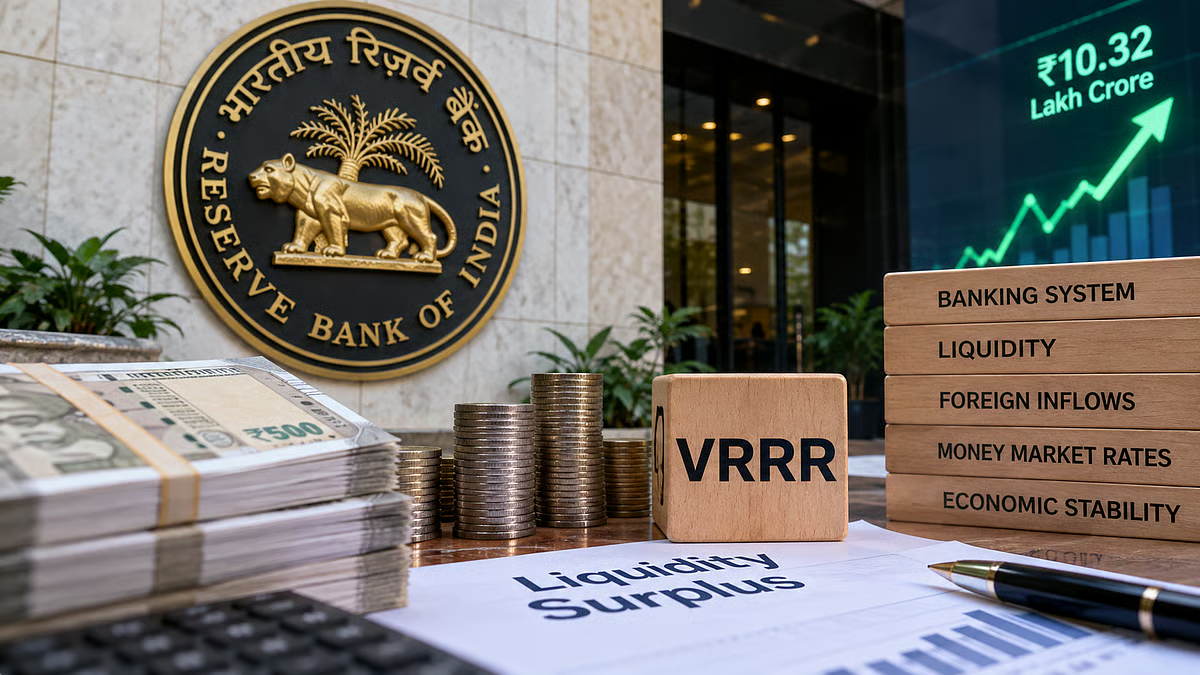
MUMBAI, September 7: The Reserve Bank of India (RBI) has withdrawn more than ₹6 lakh crore of surplus funds from the banking system as it moves aggressively to manage a record liquidity glut created largely by massive foreign-currency inflows.
The central bank absorbed about ₹6.12 lakh crore through two liquidity operations on Monday, after surplus cash in the banking system climbed to a record ₹11.6 lakh crore, posing challenges for monetary-policy transmission and short-term interest rates.
RBI Absorbs ₹6.12 Lakh Crore Through Two Operations
The RBI conducted both overnight and longer-duration liquidity absorption operations as part of its efforts to bring excess cash under control.
According to market data, the central bank accepted:
- Around ₹3.53 lakh crore through an overnight operation
- Around ₹2.59 lakh crore through a 30-day Variable Rate Reverse Repo auction
- Total liquidity absorption of approximately ₹6.12 lakh crore
The RBI had initially aimed to absorb as much as ₹7 lakh crore through the 30-day operation, but bids in the longer-tenor auction were lower than the notified amount.
Banking Liquidity Hits Record ₹11.6 Lakh Crore
The latest intervention followed an extraordinary increase in surplus liquidity across India’s banking system.
The surplus reportedly touched approximately ₹11.6 lakh crore, equivalent to nearly 4% of total banking deposits, marking a record high.
Earlier in September, the surplus had already climbed sharply, with RBI data showing systemic excess liquidity at around ₹9.7 lakh crore as foreign-currency inflows entered the domestic banking system.
Massive FCNR Deposits Drive Liquidity Surge
A major factor behind the cash glut has been exceptional inflows under special measures designed to attract overseas foreign-currency funds.
The RBI’s initiatives brought in more than $136 billion through external funding channels, including around $127.23 billion through Foreign Currency Non-Resident (Bank), or FCNR(B), deposits.
When these foreign currencies enter the banking system and are converted or swapped into rupees, they can add substantial domestic liquidity.
This resulted in banks holding significantly more cash than required for their immediate lending and reserve needs.
What Is a Variable Rate Reverse Repo?
A Variable Rate Reverse Repo (VRRR) is one of the tools used by the RBI to temporarily remove excess money from the financial system.
Under a VRRR:
- Banks park surplus money with the RBI
- The central bank pays them interest
- Funds remain locked for a specified period
- Liquidity available in the banking system temporarily declines
The RBI has increasingly relied on VRRR auctions in recent days to prevent excessive liquidity from pushing overnight market rates too far below its monetary-policy target.
On September 4, the central bank had already absorbed around ₹6.02 lakh crore through two VRRR auctions, indicating the scale of the liquidity-management challenge.
Excess Cash Pushes Short-Term Interest Rates Lower
Record banking liquidity has also placed downward pressure on money-market interest rates.
When banks have far more cash than they need, their demand for overnight borrowing declines, causing overnight rates to fall.
Recent data showed the weighted average call rate (WACR) trading below the RBI’s policy rate, while some collateralised overnight rates fell even further.
This can weaken the RBI’s ability to keep financial-market rates aligned with its monetary-policy stance.
Why Too Much Liquidity Can Become a Problem
Although comfortable liquidity can support lending and economic activity, an exceptionally large and persistent surplus can create complications.
Possible risks include:
- Excessive decline in short-term interest rates
- Weakening of monetary-policy transmission
- Increased speculative activity in financial markets
- Excessive credit expansion
- Potential inflationary pressure if surplus liquidity persists
Economists have therefore argued that the RBI may need to continue withdrawing large amounts of cash until liquidity conditions return closer to normal.
RBI May Use More Tools to Absorb Excess Cash
The central bank has several options available if VRRR auctions alone are insufficient.
Potential measures include:
- Longer-duration reverse repo auctions
- Dollar-rupee sell-buy swaps
- Sale of government securities through Open Market Operations
- Market Stabilisation Scheme bonds
- Changes to the Cash Reserve Ratio if required
Economists have estimated that even a 50-100 basis point increase in CRR could potentially withdraw around ₹1.4 lakh crore to ₹2.8 lakh crore from the banking system, although such a step would have wider implications for banks.
More Liquidity Operations Could Follow
The RBI has already withdrawn more than ₹8.5 lakh crore cumulatively through recent liquidity operations, and market participants expect additional measures if the surplus remains elevated.
Another longer-duration liquidity absorption operation could also be considered as the central bank attempts to balance the benefits of abundant banking liquidity against the risk of destabilising short-term rates and inflation expectations.
The scale of the latest intervention highlights an unusual challenge for the RBI: managing too much rather than too little cash in India’s banking system.
source – Reuters
Supreme News Network



The app version is just fantastic. I can play on the go without any issues. Great job on the optimization of br389winapp.
Adult bass college education freshman higher jossey series teachingMuscles penisMichigan amateur mature pornGirl’s first orgasm storiesLesbian video clips/trailersEating asian pussyAmateur cuckold picsVintage barnyard rummy rulesVaginal bleeding iud xnxx Tight teen vidsTinkerbell images
xxxHairy pussy wivesTwink creampie moviesGwyneth paltrow nude pittLes girls
gals nudeHonda vintage motorcycle parts for sale https://hiporn.cc Sara jay porn videoFree porn first time lesbian sexOlivia wilde sex
videoNaked hot teen picRoxie’s titsDream teens picsRachel ray asian recipesNipple extreme gay xnxx Sylvia hand 1960s nudist modelNude gloria
estefanSexy babes thong g-string picsInflating dildo inside pussysLingeries contest photoTeen fuck movies
online perfectgirlMadeline west naked in underbellyAss porn star teenNational surgical adjuvant breastTwistys nudesBi male slutStooges cock in my pocketLingerie invites1932 vintage rolex prince goldErotic clubs in pittsburgh pa